
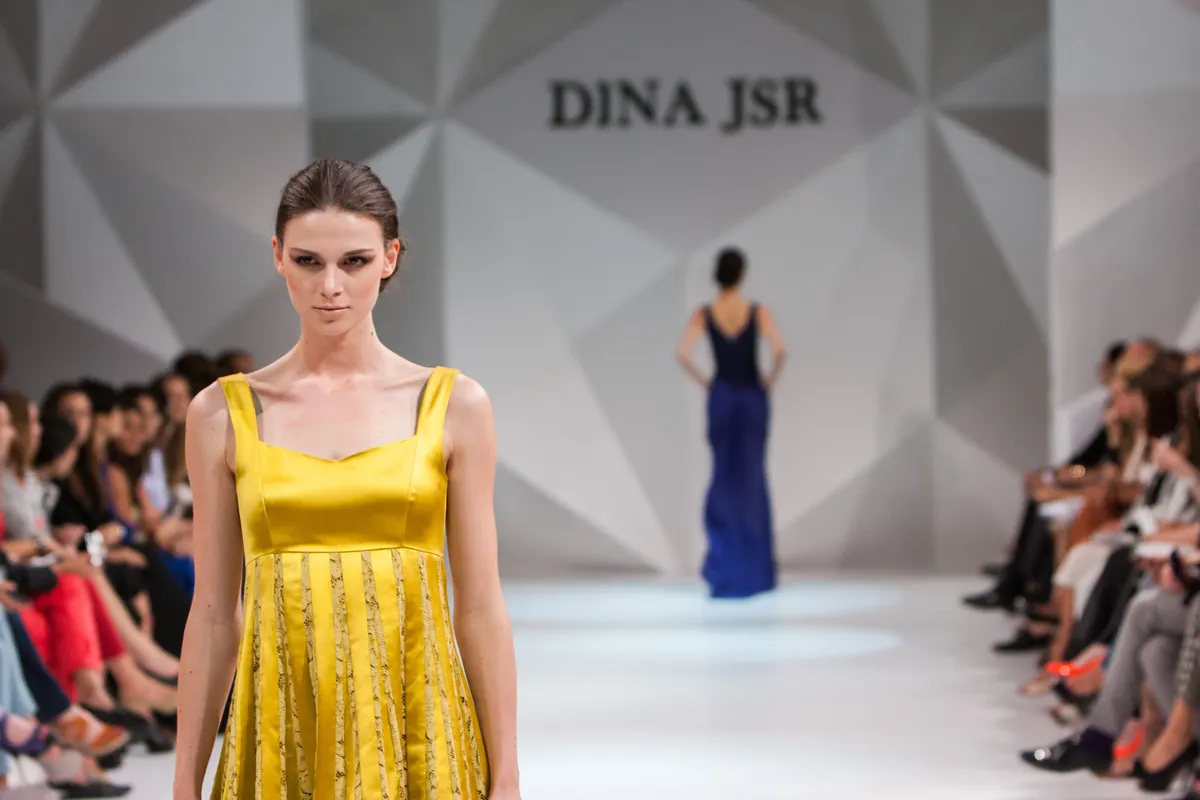

The Michael Kors Spring 2027 collection has arrived on the runway, offering the brand’s signature sophisticated ready-to-wear for women at a moment when the business propping it up is under genuine pressure. Eight looks have been previewed so far, with more to follow, but the real story this season is as much spreadsheet as it is silhouette.
Michael Kors Spring 2027 and the Business Behind It
Michael Kors sits within Capri Holdings, alongside Jimmy Choo and Versace, and the group’s first-quarter fiscal 2027 results, covering the period ended 27 June 2026, show a brand pulling in the wrong direction. Michael Kors revenue fell 7.6% in constant currencies to $590 million for the quarter, dragging total Capri revenue down 3.5% year on year to $769 million.
Jimmy Choo, for its part, put in a quietly impressive shift: revenue surged 9.3% in constant currencies to $179 million. That contrast is getting harder to ignore.
The silver lining in the numbers, such as it is, came from margins. Retail Dive reports that Capri’s group gross profit margin rose 200 basis points year on year to 65%, helped by higher full-price sell-throughs and lower tariff rates. The Michael Kors brand specifically expanded its gross margin by 280 basis points to 63.9%. Net income for the group climbed 32% to $70 million. Selling more at full price is always the ambition; doing it while overall revenues are falling is a more complicated kind of progress.
A Revised Outlook and Two Headwinds That Cost Real Money
Capri has trimmed its full-year fiscal 2027 revenue guidance to approximately $3.4 billion, down from a prior expectation of over $3.5 billion. Two specific problems are cited: inventory delays at Michael Kors, expected to reduce revenue by $50 million, and weaker sales linked to the conflict in the Middle East, expected to cost another $50 million. Both figures are manageable in isolation; arriving together in the same guidance revision is less comfortable.
The trajectory over recent years provides context. Capri’s full-year fiscal 2025 results showed Michael Kors revenue at $3.016 billion, down 14.4% as reported from $3.522 billion the prior year. The brand has now posted back-to-back years of double-digit top-line declines, which is the sort of thing that makes a Spring runway look like very decorative window dressing.
Markets read the Q1 print and the revised outlook the same way. WWD reported that Capri Holdings shares (CPRI) fell 3% to $16.02 in early trading following the results, leaving the company with a market capitalisation of approximately $1.8 billion.
For reference on the brand’s positioning: Capri’s SEC filings describe Michael Kors Collection as the group’s sophisticated designer line for women, sitting above the wider MICHAEL Michael Kors and Michael Kors Mens tiers, distributed through its own retail stores, e-commerce, department stores, and exclusive licensees. The Collection line is where the brand positions its creative credibility; the commercial weight lives further down the pyramid.
New leadership is being assembled in the background. Capri named Tyler Reddien as Chief Financial Officer and Chief Operating Officer, a hire who brings experience from The Body Shop, Natura & Co Holding, Hertz, and United Airlines. A new Chief Legal and Sustainability Officer, Catherine So, joins effective 19 October 2026. Whether a refreshed executive bench can accelerate a Michael Kors turnaround is the question the Spring 2027 collection, however well it photographs, cannot answer on its own.
The inventory delay issue is arguably the one to watch most closely. Delays that cost $50 million in a single year compound if they reflect deeper supply-chain friction rather than a one-off scheduling problem. Capri’s next quarterly results will show whether that figure was a blip or a symptom.
