
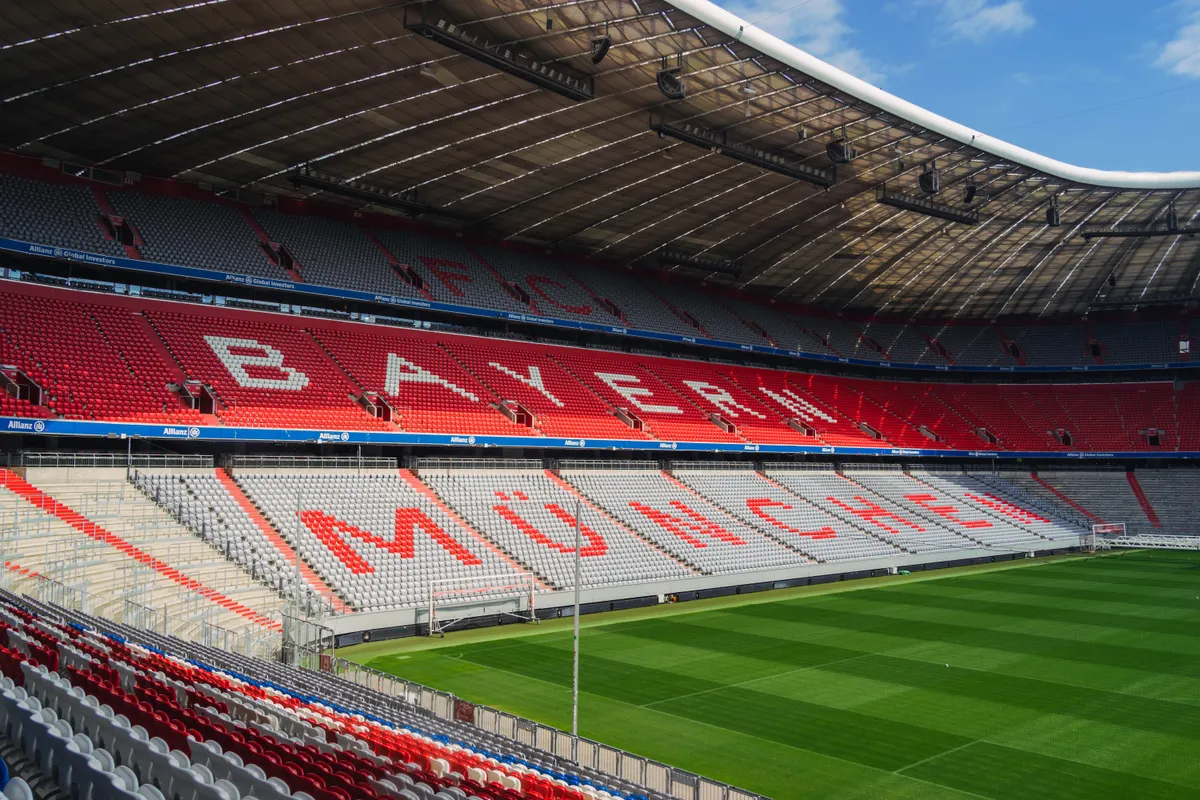

The Collaborative Fund DC United deal is the latest sign that venture capital is getting serious about pro sports ownership, though Collaborative’s angle is less about buying a trophy asset and more about turning a football stadium into a live-activation platform for its own portfolio companies.
Collaborative Fund, the New York-based generalist venture firm with roughly $1 billion under management and early bets on Lyft, Reddit, Sweetgreen, and Olipop, is acquiring a stake in D.C. United and its home ground, Audi Field. The deal awaits MLS approval.
How Collaborative Fund’s DC United Play Differs from the Thrive Playbook
The firm most responsible for opening this door is Joshua Kushner’s Thrive Capital, whose total assets under management exceed $50 billion, according to a regulatory filing cited by Bloomberg. Thrive built a dedicated, permanent-capital vehicle, Thrive Eternal, explicitly to hold what it calls ‘iconic franchises and cultural institutions’ for decades, seeded by existing investors in its venture and growth funds.
Thrive Eternal took a sub-10% stake in the San Francisco Giants, with money directed toward Oracle Park and surrounding real estate, per Bloomberg. Then came the Lakers acquisition at a record $12.5 billion, alongside former Disney CEO Bob Iger. NBA rules cap fund ownership at 20%, per Newcomer, meaning Kushner and Iger will also make large personal investments alongside the vehicle. Thrive Eternal’s efforts to buy into the FIFA World Cup were separately abandoned after what Newcomer describes as a ‘ferocious global backlash.’
Collaborative is not doing any of that. It is investing out of the same early-stage fund it uses for seed and Series A cheques. No permanent-capital structure, no nine-figure personal co-investment alongside it. Founder and managing partner Craig Shapiro framed the deal in a memo as an extension of the firm’s existing thesis: ‘A franchise is the ultimate consumer product.’
The structure matters because it reveals the intent. Where Thrive Eternal is designed as a long-term hold without a fixed timeline for returning capital, Private Equity Wire reports, Collaborative is treating Audi Field almost as infrastructure. As a backer of Whoop and Olipop, the firm is imagining product activations for fans at the stadium: Whoop wearable experiences, Olipop in the concessions. The 20,000-seat venue, which opened in 2018 in Washington D.C.’s Buzzard Point neighbourhood, already hosts over 100 events per year, per D.C. United’s official site, including the Unite the District Fest arts and music festival. Audi Field is also home to the first sportsbook at an MLS venue, a FanDuel partnership.
Shapiro’s pitch at a TechCrunch StrictlyVC event in New York: tens of thousands of people showing up on a predictable schedule constitute a distribution channel, particularly now that live experience is becoming more valuable as AI makes more of daily life feel synthetic.
The Valuation Case Behind the Collaborative Fund DC United Investment
The portfolio-activation story is the headline, but the underlying asset is not exactly a bad deal either. Forbes puts D.C. United’s enterprise valuation at $785 million in 2025, up from $775 million the prior year, with the club ranking 3rd in MLS operating income and generating $90 million in revenue for the 2024–2025 season. Sportico, cited by SportsPro, had reported the club was close to selling a minority stake of up to 5% at a valuation of just over $800 million, including an estimated $150 million in debt, which would have represented the highest-ever valuation for an MLS club selling a minority position at that time.
The longer-term trajectory is the real argument. D.C. United was valued at $35 million in 2008 and, per SportsPro, managing general owner Jason Levien paid around $60 million for his stake in 2012. MLS’s average club value is up roughly 134% since 2019, per the snippet’s figures. Shapiro also pointed to the tailwinds specific to American soccer: the FIFA World Cup recently concluded, the LA Olympics ahead, and soaring youth participation numbers in the United States.
Beyond the pitch, the club’s asset base is expanding. D.C. United has a $620 million plan to add 8,000 seats and a climate-controlled roof to Audi Field, per CB Insights-aggregated reports, with a D.C. Council hearing already set despite opposition from Mayor Bowser. A mixed-use development outside the stadium with Hoffman & Associates will add 455 apartment residences alongside retail and entertainment space, per SportsPro. The club also has a talent pipeline through Loudoun United FC, its USL Championship affiliate founded in 2018, and rights to a future Baltimore expansion team.
For private equity, sports ownership is old news: Sixth Street holds stakes in the Celtics, Patriots, and the Giants (where PitchBook notes the franchise carries a 142-year history and Forbes valued it at $3.8 billion as of March 2024); Ares, RedBird, and Arctos have built similar minority positions across multiple leagues. What Thrive and Collaborative are testing is whether a venture fund’s logic, portfolio synergies, long time horizons, concentrated bets, belongs in the same conversation. The MLS approval process will be the first real test of that thesis for Collaborative.
