
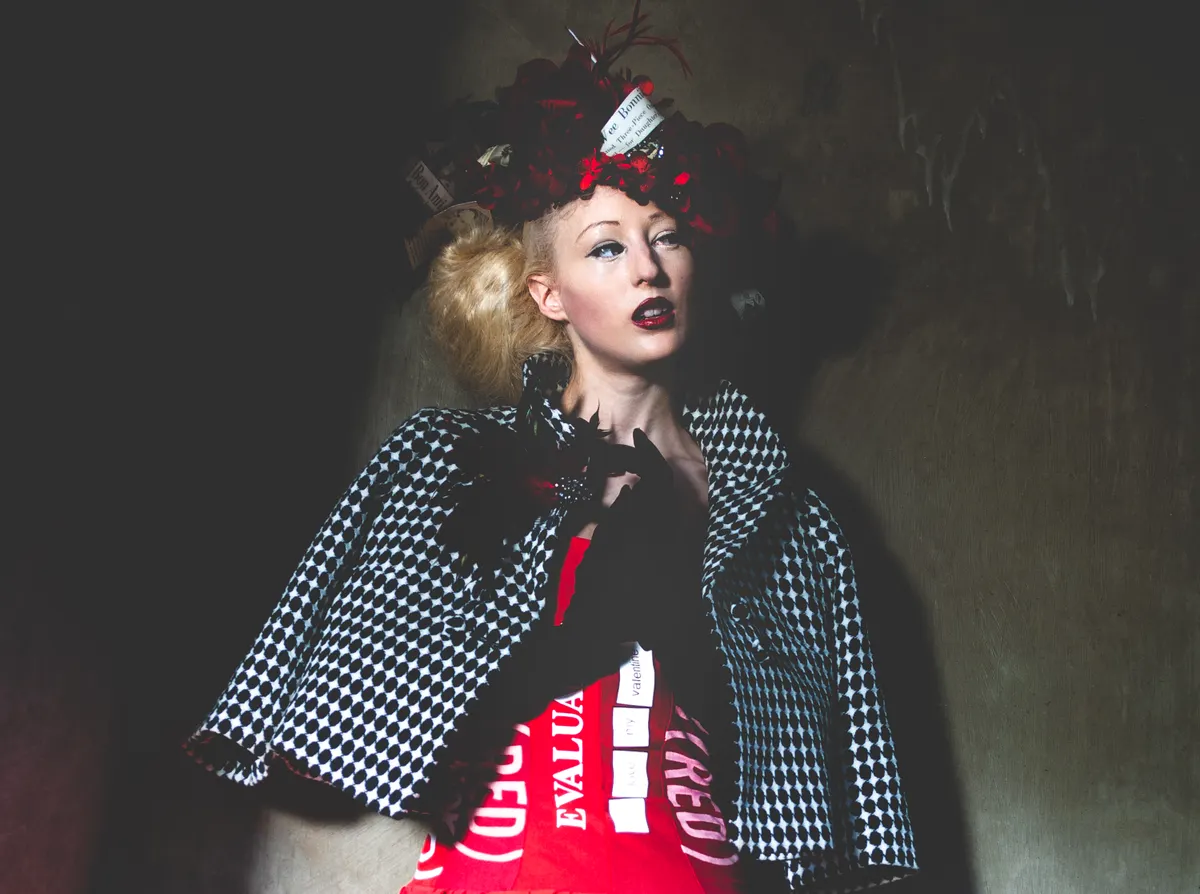

The Mukcyen Tokyo Spring 2027 collection, titled Low Energy, is Yuka Kimura’s most direct statement yet: a wardrobe built for people who are exhausted but still have to show up. Now six seasons into the brand, the 28-year-old Tokyo-born designer framed the collection around Michelangelo Antonioni’s 1964 film Red Desert, and what it has to say about our particular moment.
Antonioni’s film traced the psychological damage of industrialisation. Kimura’s argument is that the machinery has simply changed form. ‘A messy, overwhelming variety of inputs,’ she said of the digital present. ‘People are becoming increasingly sensitive to this kind of noise, or simply exhausted by it. I created this collection to express that feeling.’
Mukcyen Tokyo Spring 2027 and the Logic of Low Energy
The collection’s defining gestures were hoods that sprang directly from the shoulders of tailored jackets, or draped Alaïa-style from bodycon tops. Their purpose, Kimura noted with a dry practicality, was straightforward: ‘Good for when you don’t want to talk to anyone.’
That instinct for protection ran through the whole lineup. Asymmetric corsets and skirts carried disheveled hems of lace. Sheer black dresses fell fluidly from the throat to the ankles. Scarves printed with newspaper text were knotted around the torso with rope. T-shirts featured neckbands pulled tight across the sternum, or were cut with apertures that revealed a sliver of hip. Everything was finished with heeled mules with elongated toes: not quite spikes, but the effect landed somewhere near intimidation.
Kimura calls her tight, sheer pieces ‘second-skin’: fabric that envelops rather than hangs, tangled against the body like bedsheets. ‘The idea is that by having the fabric cling to the skin rather than hanging loosely, it creates a sense of facing oneself,’ she said. It is a frame that echoes Mukcyen‘s official ethos of exploring the boundaries between structure and sensation, body and clothing, with themes of discomfort sitting at its core.
The overall mood was grungy and post-apocalyptic, but the intention behind it was more intimate. The wearer should feel attractive and confident, but also protected: enjoying their own body squarely on their own terms. ‘I want the wearer to change a little through the clothes,’ Kimura said. ‘Even a small shift in mindset, that’s something only clothing can really do.’
Building a Brand From the Ground Up
The Low Energy collection lands at a moment when Mukcyen is still finding its footing as a label, but accelerating. According to Rakuten Fashion Week Tokyo, Kimura made her debut as the brand’s designer in the 2024–25 Autumn/Winter season, when she took creative control of Mukcyen, which was originally founded by SOHKI of M A S U. Spring 2027 is her sixth season at the helm.
The brand’s name itself is a piece of biography. As SHOWstudio notes, ‘Mukcyen’ derives from ‘mù cūn,’ the Mandarin pronunciation of Kimura’s surname written in Chinese characters. The identity has always been personal.
Kimura was born in Tokyo in 1998, according to her Rakuten Fashion Week Tokyo brand profile. Before launching the brand, she built an audience as an influencer under the Instagram handle @gemmalzr, and sharpened her craft in fabric production and graphic design at Yohji Yamamoto. That background in fabric and construction shows in Low Energy: Kimura pays close attention to how silhouettes and textiles interact with the body, considering ‘which areas women might want to hide or reveal’ as the core of her practice.
By her second season, Vogue was describing her Tokyo Fall 2026 outing as a ‘confident sophomore show’ that closed the official schedule. Low Energy builds on that momentum, offering Mukcyen’s growing community something practical: a little armour for the days when everything feels like too much noise.
Kimura pays close attention to how her silhouettes and fabrics flatter the body. The question now is whether that attention translates into the kind of staying power that outlasts a single strong season.
