
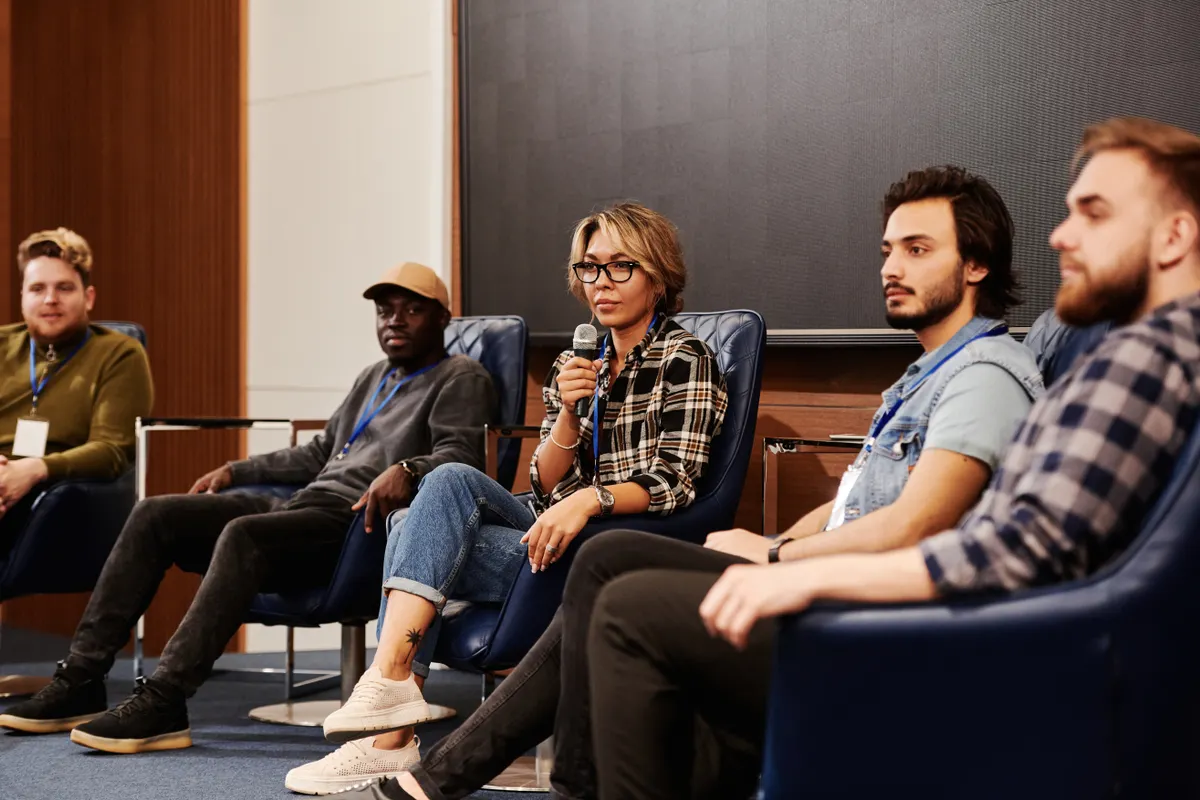

The European AI sovereignty debate ran like a live wire through TechBBQ this year, surfacing in panel rooms, on rooftops, and at cocktail bars across Copenhagen, long after the formal sessions had wrapped. The annual Nordic tech conference, which closed on 27 August, drew investors, founders, and operators from across the continent, and the question they kept circling was the same: who actually controls the AI infrastructure Europe is increasingly dependent on?
It was the kind of question that matched the conference’s own theme, ‘Emerging from Agency’, rather too neatly. A real-world trigger had sharpened the mood: Anthropic’s models Mythos and Fable became unavailable to users outside Europe earlier this year, rattling at least some of the teams that had built workflows around them. One startup executive told the reporter covering the event that the disruption seriously set back his software team. Another shrugged. The dependency on US and Chinese AI infrastructure might cause headaches eventually, the second exec allowed, but for now things are broadly fine.
That split reaction pretty much captures where European tech sits right now: aware of the risk, not yet panicked enough to act on it.
What the European AI Sovereignty Debate Sounded Like on Stage
Ellen de Brever, angel investor and head of partnerships at the Novo Nordisk Foundation Cellerator, put the shift in mood clearly. ‘TechBBQ’s theme of agency felt particularly timely this year as the conversation shifted from what AI can do to what we’re actually willing to let it do,’ she said. The panels, she noted, ‘weren’t about smarter machines, but about human judgment and who gets to stay in the driver’s seat.’
Her sharper observation came when she addressed AI agents directly. ‘The age of AI agents isn’t really a story about machines gaining agency,’ she said. ‘It’s a story about humans deciding what to give up.’
TechBBQ also hosted Signal President Meredith Whittaker on a panel focused on whether privacy and AI can coexist. Whittaker’s position on AI use in her own life is instructive: she has said she uses AI tools only ‘to format a document here and there’ and does not use them to think through ideas, explaining, ‘I’m very serious about my thinking and writing, and I don’t want the process of working through an idea […] to be foreclosed or eclipsed by the response of a system that’s averaging what’s already out there,’ as she told TechCrunch separately.
At the conference, she spoke out against AI assistants being embedded into operating systems, describing the current AI era as building a ‘data collection apparatus’ and accusing AI labs of using marketing to make users forget ‘about the collateral consequences’ of that data accumulation. Her commercial read: ‘There is still a huge market need for privacy. And particularly with the sovereignty concerns, we will have customers here.’
On the agentic AI question, Whittaker has argued that an AI system handling everyday tasks would require access to a user’s credit card, browser, messaging apps, home address, and calendar, and has called for such systems to be opt-in by default, a position she outlined to the World Economic Forum earlier this year.
Mostaque’s Warning, and His Optimism
Emad Mostaque brought a different energy to the stage. The former global macro hedge fund manager, who holds a mathematics and computer science degree from Oxford, stepped down as CEO of Stability AI in March 2024 and has since founded Intelligent Internet, where he now serves as CEO. At TechBBQ, he warned the audience to ‘assume that the Internet will go offline in the next few years,’ according to Trending Topics.
His remarks on power concentration were pointed. ‘Sovereignty is the ability to resist power being exerted over you,’ he said on the panel. He spoke about a small number of AI labs consolidating control, and predicted, ‘Inevitably, every country will be run by AI,’ adding that ‘the person that controls the AI controls the country.’
He did not leave it there, though. Mostaque closed with a note of optimism, predicting breakthroughs in physics, mathematics, and new materials, and saying: ‘This is the most wonderful time ever. If you want to achieve something, you always had to convince people. Now you can just convince your agents.’
Mia Negru, advocacy and engagement director for the nonprofit Life With Artificials, sent a message after the panel that took the long view. ‘If intelligent agents perform cognitive work and robots increasingly perform physical work, we may be approaching something much bigger than another technological revolution,’ she wrote. ‘We may have to rethink ownership, work, democracy, economic participation and eventually even who gets to participate in society.’
Between the heavy panel sessions, the conference did what conferences do: Lovable, Nvidia, OpenAI, AWS Startups, and HSBC co-hosted a rooftop barbecue; Ada Ventures gathered founders at cocktail bar Bird; and a speakers’ dinner on a Copenhagen island featured fire dancers. De Brever’s closing thought on all of it: ‘Human connection, face-to-face, building relationships, sharing ideas, and reminding each other of what technology can never quite replace.’
The sovereignty question, of course, did not get answered. It rarely does at conferences. The test will be whether Europe’s next infrastructure decisions reflect any of the urgency that filled those rooms, or whether the after-party ran long enough to blur the edges of it all.
