

Water-rich foods for hydration deserve a proper seat at the table, not just a footnote below your water bottle. Food accounts for roughly 19% of our total daily water intake, according to the National Academies’ Dietary Reference Intakes report, which means what you eat matters more than most hydration advice lets on.
How Much Water Do You Actually Need?
The numbers floating around are muddier than they should be. The Harvard T.H. Chan School of Public Health puts the National Academy of Medicine’s beverage-based adequate intake at 13 cups daily for men and 9 cups for women. The higher figures you may have seen elsewhere (15.5 cups for men, 11.5 for women) cover total water from all sources, food included.
Those targets can flex further depending on body size, physical activity, and climate. The National Academies note that their reference levels are calibrated for healthy, sedentary adults in temperate conditions, per their Dietary Reference Intakes press release. Exercise or a hot summer adds meaningful demand on top.
Who Is Actually Dehydrated?
More people than the wellness industry would have you believe, and more than the worried-well crowd expects. Dehydration prevalence among US adults ranges from 17% to 28%, according to NIH/NCBI StatPearls, and older adults are 20% to 30% more susceptible than younger people, partly because the thirst mechanism blunts with age and kidneys become less efficient at conserving water.
A UCLA study published in SAGE Open Nursing puts the figure for community-dwelling elderly at up to 40% chronically underhydrated, and links dehydration to a 5% increase in preventable emergency room visits between 2008 and 2012. A CDC data brief adds kidney stones and impaired cognitive performance to the list of consequences, beyond the better-known fatigue, headaches, and muscle cramps.
Signs are easy to miss. Thirst is obvious. Dizziness, persistent headaches, dull skin that lacks elasticity, and darker urine are subtler flags worth paying attention to.
The Ten Water-Rich Foods Worth Eating
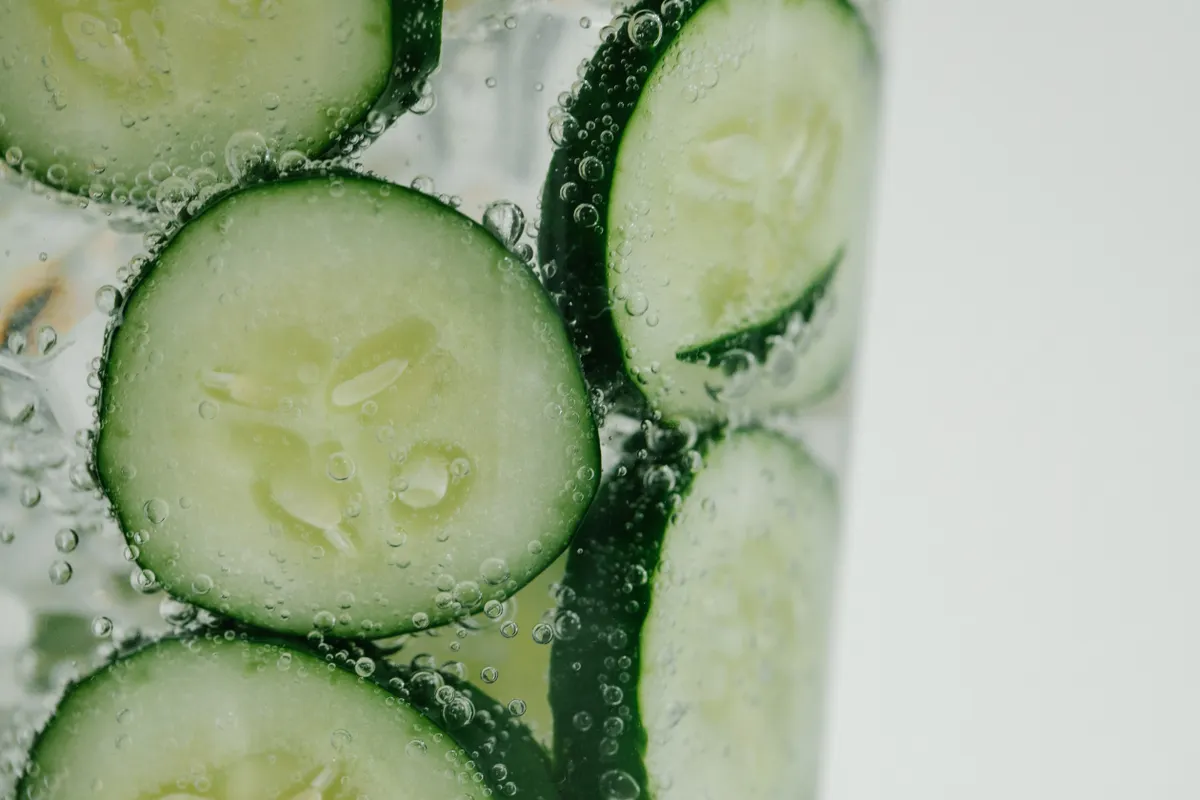
Cucumbers and lettuce sit at the top, both clocking in at 96% water by weight. Cucumbers also bring vitamin C, flavonoids, tannins, and roughly half your daily vitamin K from a single medium specimen. Lettuce, especially the darker-leafed varieties, adds vitamins A and C to that hydration base.
Tomatoes, radishes, and celery all come in at 95% water. Tomatoes carry lycopene and beta-carotene, which research associates with reduced cancer risk and stronger bones. Radishes are an underused source of vitamin C and potassium. Celery’s reputation in wellness circles is backed by a genuine nutrient profile: fibre, vitamins, and anti-inflammatory compounds.
Zucchini (93% water) is worth eating raw or lightly steamed if you want to preserve its vitamins A, E, and C, since high heat can neutralise those antioxidants. Watermelon at 92% is perhaps the most famous hydrating food, with the added benefit of magnesium. Strawberries (91% water) supply lycopene for UV skin protection and vitamin C for collagen production. Cantaloupe (90% water) is rich in vitamin A, and peaches (88% water) round out the list with beta-carotene and vitamin C.
The Milk Finding That Still Surprises People
The claim that milk is more hydrating than water has actual science behind it, not just industry lobbying. A randomised trial by Maughan et al., published in the American Journal of Clinical Nutrition, tested 13 beverages and calculated a Beverage Hydration Index (BHI) relative to still water (BHI = 1.0). Skimmed milk scored a BHI of 1.58 and full-fat milk scored 1.50, both well above water. Measured another way: four-hour urine output after drinking milk was around 1,050 g compared to 1,337 g after water, meaning the body retained milk’s fluid more efficiently.
The mechanism, explained by ACE Fitness, comes down to electrolytes: milk’s sodium and potassium content significantly outpaces sports drinks in the BHI study, slowing gastric emptying and supporting fluid retention. It does not mean you should swap all your water for semi-skimmed, but it does mean a glass with meals is pulling more hydration weight than it looks.
If you are eating a cucumber salad, slicing some watermelon, and washing it down with milk, you are doing more for your hydration than the water bottle obsessives might credit. The foods-for-hydration conversation is less about hacks and more about a diet that quietly handles a fifth of the job for you.
