
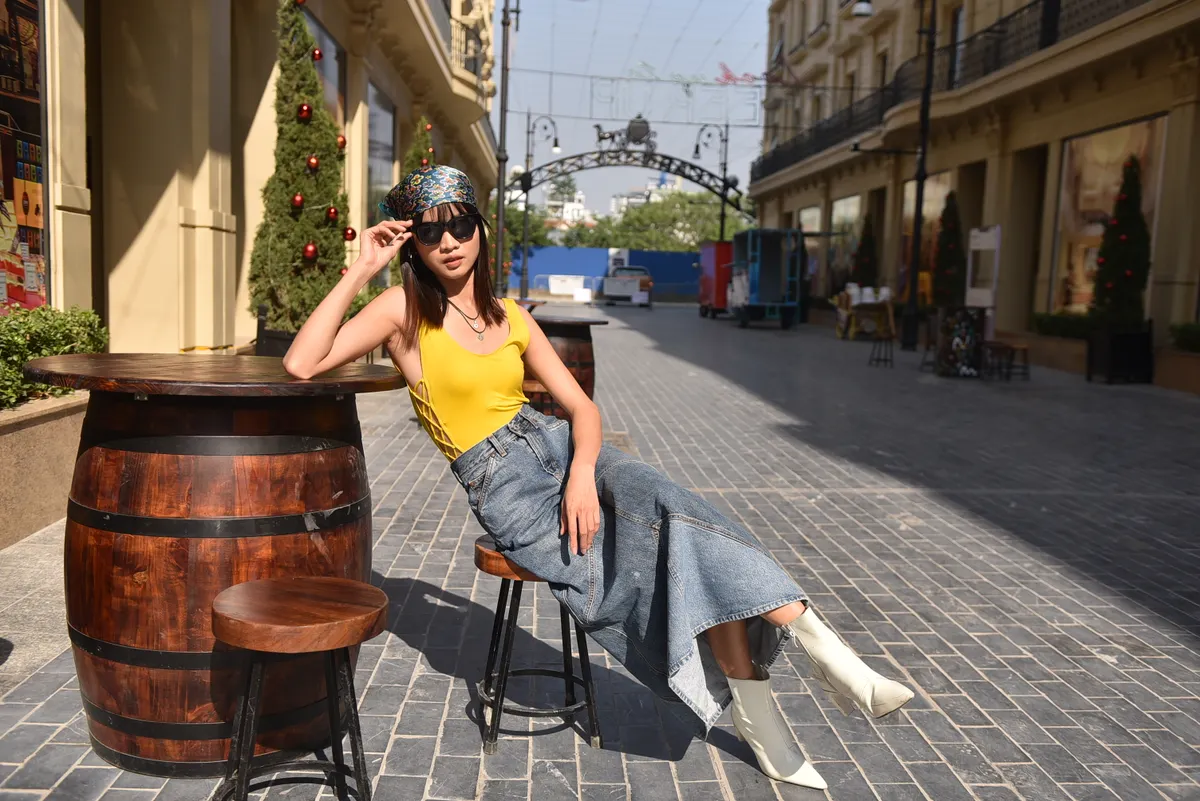

Rihanna’s skirt-jean look has a name now: the skean. Spotted leaving dinner at Cesar in Paris, the superstar wore a pair of light-wash jeans featuring a floor-length panel on one side, producing an effect somewhere between tailored denim and a split-hem maxi skirt. It is precisely the kind of thing that reads as bizarre in a description and inexplicably correct in practice.
The Rihanna Skirt-Jean Look, Decoded
The outfit was styled with minimal fuss: a black zip-up hoodie, a leather Dior bag, and a pair of Miu Miu snakeskin sneakers. On those sneakers alone, there is a bit of a story. Highsnobiety reports that the style debuted on the Miu Miu Fall/Winter 2025 runway and is a snakeskin reworking of the brand’s collaborative New Balance 530 dad sneaker. Bergdorf Goodman lists the Miu Miu Gymnasium sneakers in snakeskin leather and technical fabric at $1,350, currently marked to $674.99, with a further 25% reduction available at $506.24. So yes: the understated footwear choice is doing a lot of quiet work.
Back to the jeans. The appeal of the skean is that it does not read as a costume. From one angle it is just a regular pair of well-fitted light-wash denim. The asymmetric panel only reveals itself as you move around it, which is exactly the kind of reveal that runway designers have been chasing this season.
Diesel made denim briefs. A.W.A.K.E. Mode sent out backwards jean shirt-dresses. Stella McCartney showed bejeweled jeans. The collective message from the fall runways was that denim, the most democratic of fabrics, was overdue for some genuine strangeness. The skean fits that brief rather neatly.
The Brands Already in the Skirt-Jean Business
A few labels got here before Rihanna made it a moment. The Frankie Shop stocks the Bettter Wrap Jeans: a regular-fit, high-rise, straight-leg style in vintage wash with a front wrap detail, snap buttons, and a cut-out at the waistband. The denim itself comes with a philosophy attached. Bettter describes its pieces as reconstructed from upcycled vintage menswear jeans, built on the premise that all the clothes humanity needs have already been produced and over-produced. Sustainability credibility aside, pricing reflects the handmade approach: Net-a-Porter lists Bettter’s wrap layered frayed high-rise style at $1,080, with other wide-leg styles at $700 (some marked 40% off at $420).
Then there are the Agolde Peplum Jeans, which take a slightly different structural approach: a sculptural overskirt that begins below the belt loops, a Western-feel waistband, and a flared panel measuring 18 inches at the leg. Made from 100% regenerative cotton in Turkey, they lean more prairie than Frankenstein, but the underlying logic is identical. Who What Wear has already labelled them ‘the first new denim trend of 2026,’ building on Agolde’s run of viral styles including the Vana Fold, Elson, and Arc Criss Cross jeans.
What is useful to clock here is that these are not fast-fashion interpretations rushed out to chase a celebrity photo. Both the Bettter and Agolde versions were in market before the Paris dinner. Rihanna did not invent the silhouette; she just administered the cultural defibrillator.
The honest read on the skean is that it works because it commits. Half-measures in experimental denim tend to look like a wardrobe malfunction. A full floor-length panel, worn with the confidence of someone who once wore a yellow Met Gala cape to casually announce a pregnancy, lands differently. The question now is how far the interpretation travels from the runway and the luxury tier down to the high street, and how quickly. Given the Agolde version is already being called a 2026 trend before the year has really settled in, probably faster than anyone expected.
