
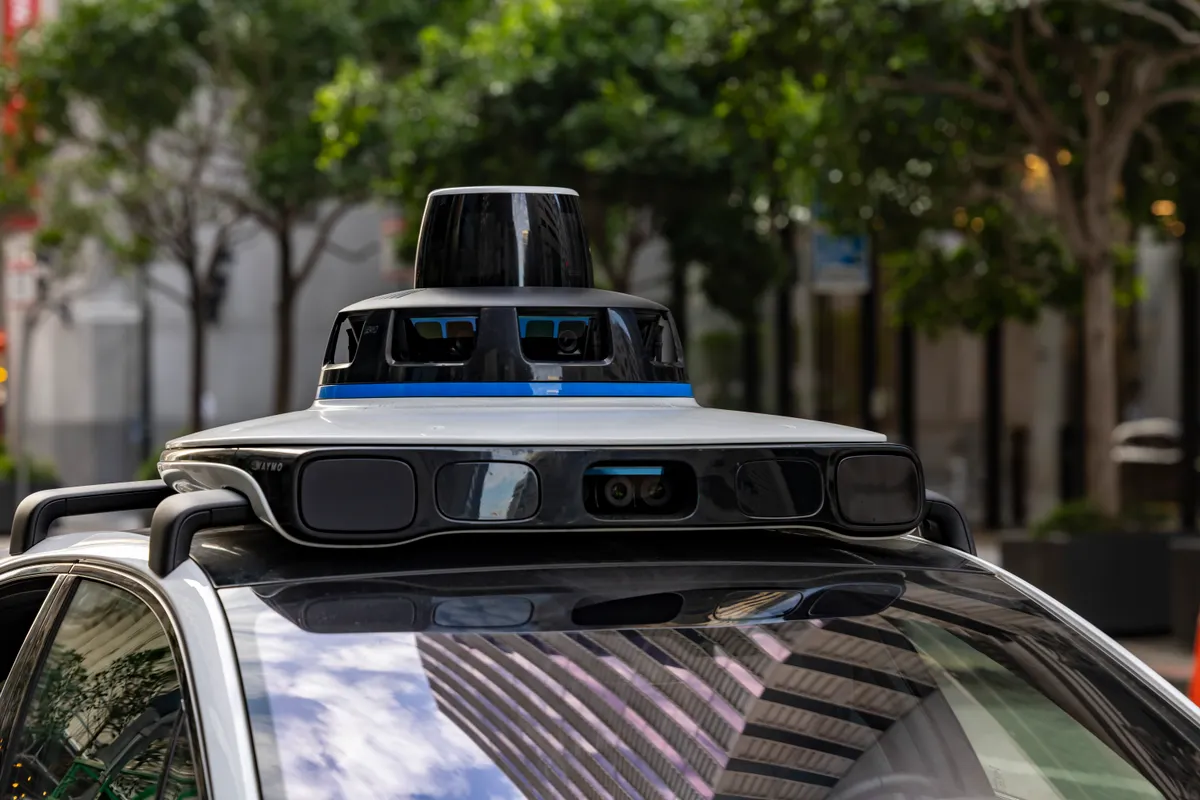

Nevada robotaxi permits covering up to 8,000 autonomous vehicles in Clark County have been granted to Tesla, Waymo, and an Uber subsidiary, turning Las Vegas into what may be the most contested driverless-car market on the planet. The approvals were granted by the Nevada Transportation Authority (NTA) under the framework established by Nevada Revised Statutes Chapter 706B and Nevada Administrative Code Chapter 706B.
What the Nevada Robotaxi Permits Actually Allow
Tesla received the largest single authorisation: up to 5,000 robotaxis across Clark County over the next 12 months. Waymo was approved for up to 1,000 autonomous vehicles. Uber’s permit, covering up to 1,000 vehicles through partnerships with Hyundai subsidiary Motional and Zoox, was issued to Aviari Services LLC, Uber’s autonomous vehicle subsidiary operating under Docket 26-07015. Zoox holds a separate permit allowing it to operate up to 100 robotaxis independently.
The NTA orders require each company to commence operations within 120 days of permit issuance. Companies must also report crashes under NRS 706B.260 and keep inspection, maintenance, and repair records under NRS 706B.220, so there is at least a compliance paper trail, even if enforcement is a separate matter.
Per the Las Vegas Sun, the permits grant access to Harry Reid International Airport roads within Clark County, though each company still needs separate authorisation from the Clark County Department of Aviation before it can actually pick up or drop off at the airport. Permission to access the roads is not the same as permission to service the terminal.
For Tesla, the new permit is a substantial step up from where it started. According to the Las Vegas Sun, Tesla’s previous interim order limited it to just 10 robotaxis confined to a narrow stretch of the Las Vegas Strip, with a 45 mph speed cap and restrictions on airport-area pickups. Its application for 5,000 vehicles was filed on 5 June.
The rollout plan matters, too. Coyote Country LV reports that Tesla plans to begin its Clark County operation using the Model Y electric crossover, with the Cybercab (a two-seat vehicle without a steering wheel or pedals, unveiled in 2024) introduced gradually as the programme matures. Running the Model Y first is a pragmatic hedge: the car has a conventional safety profile that regulators and riders already understand.
The Gap Between Permit Ceiling and Likely Reality
Here is where the theatre starts. Tesla’s own Cybercab chief engineer, Eric Early, was candid at the NTA meeting about what the 5,000-vehicle ceiling actually means in practice.
‘The 5,000 has always been a ceiling for us,’ Early said. ‘I don’t think we’ll be in a position by this time next year to deploy 5,000 vehicles, and it’s not [because of] the technology. … I think we would be extremely happy and satisfied if we could get ourselves up to 2,500, maybe a bit higher than that in the next year.’
So the headline number is, by the company’s own admission, aspirational. Even at half the permitted total, though, the competitive picture is striking: Tesla, Waymo, and Uber’s autonomous partners would all be competing for the same Las Vegas riders across the same roads.
Most of the autonomous vehicle testing to date has been concentrated in the Golden Triangle, the area between Harry Reid International Airport and Las Vegas Boulevard. Motional is also testing in the downtown area and in Town Square, a shopping district. That geography matters, because the Livery Operators Association and local taxi firms raised concerns at the hearing about saturation in exactly that corridor.
Las Vegas Drivers Are Watching Very Closely
Kimberly Maxson-Rushton, a lawyer representing the Livery Operators Association, set out their opposition plainly at the hearing. ‘These applications raise two grave concerns,’ she said. ‘One deals with the oversaturation of the commercial transportation industry as a whole in Nevada. And the second one deals with the overcrowding of the roadways, and specifically the Golden Triangle.’
It is a reasonable concern, even if the permit holders would frame it differently. The approvals do not guarantee deployment at scale; they guarantee the right to try. Whether 8,000 Nevada robotaxi permits translate into 8,000 vehicles on the road, or a few hundred in a tightly managed pilot, depends on each company’s operational readiness and how regulators respond to early incidents.
Uber, for its part, has continued to argue for a hybrid model in which ride-hailing networks mix human drivers and autonomous vehicles. The company lobbied for a system that would require robotaxis to operate alongside human drivers, a position that puts it at odds with Waymo and conveniently hedges against its own autonomous ambitions lagging behind its competitors.
The NTA general session ran for approximately four hours before the permits were approved. The first real test of all this theatre will come when the 120-day commencement clock expires and regulators ask each company to show what it actually put on the road.
