
Uber’s autonomous vehicle partnerships now span more than 30 companies across four continents, a remarkable rebuild for a business that sold off its entire in-house self-driving operation just a few years ago. The cheque sizes are getting very large. The cracks are starting to show, too.
Inside Uber’s Autonomous Vehicle Partnerships: Where the Money Actually Goes
The centrepiece of Uber’s spending is its bet on Lucid Group. What started as a $300 million investment (which closed on 4 September 2025) grew in April 2026 into an additional $200 million, bringing Uber’s total commitment to Lucid to $500 million. That April announcement also came with a minimum vehicle order increase, from 20,000 to 35,000 Lucid Gravity SUVs, which will carry Nuro’s self-driving system. Uber now owns more than 11% of the company.
The Lucid position has not been a smooth ride. According to a Lucid Group investor relations release, Uber’s April 2026 commitment coincided with Saudi Arabia’s Public Investment Fund (PIF) affiliate Ayar Third Investment Company putting in $550 million in convertible preferred stock, lifting the combined capital raise to approximately $1.05 billion. That’s a lot of external support for an EV maker whose stock had already punished Uber: the initial 13,715,121 shares Uber acquired were valued at $326.3 million at the end of September 2025, but had slid to $194.8 million (a roughly 40% decline) after Lucid executed a 1-for-10 reverse stock split.
The Nuro relationship layers on another $500 million, which includes Uber’s participation in Nuro’s 2025 Series E round plus future milestone-based investments, according to sources familiar with the terms.
Then there is Waabi. In January 2026, the self-driving trucking startup raised $1 billion, comprising a $750 million Series C and around $250 million in milestone-based capital from Uber. Add WeRide, where Uber increased its investment by $100 million as part of a Middle East expansion covering Abu Dhabi, Dubai, and Riyadh. And Rivian, where the deal could be worth up to $1.25 billion, with an initial $300 million from Uber and plans for 10,000 autonomous R2 SUVs across 25 cities by 2031.
The cumulative picture is of a company making very large, very early bets on technology that, in most cases, has not yet operated at commercial scale without a human sitting nervously in the front seat.
Wayve, Waymo, and the Partnerships That Are Going Sideways
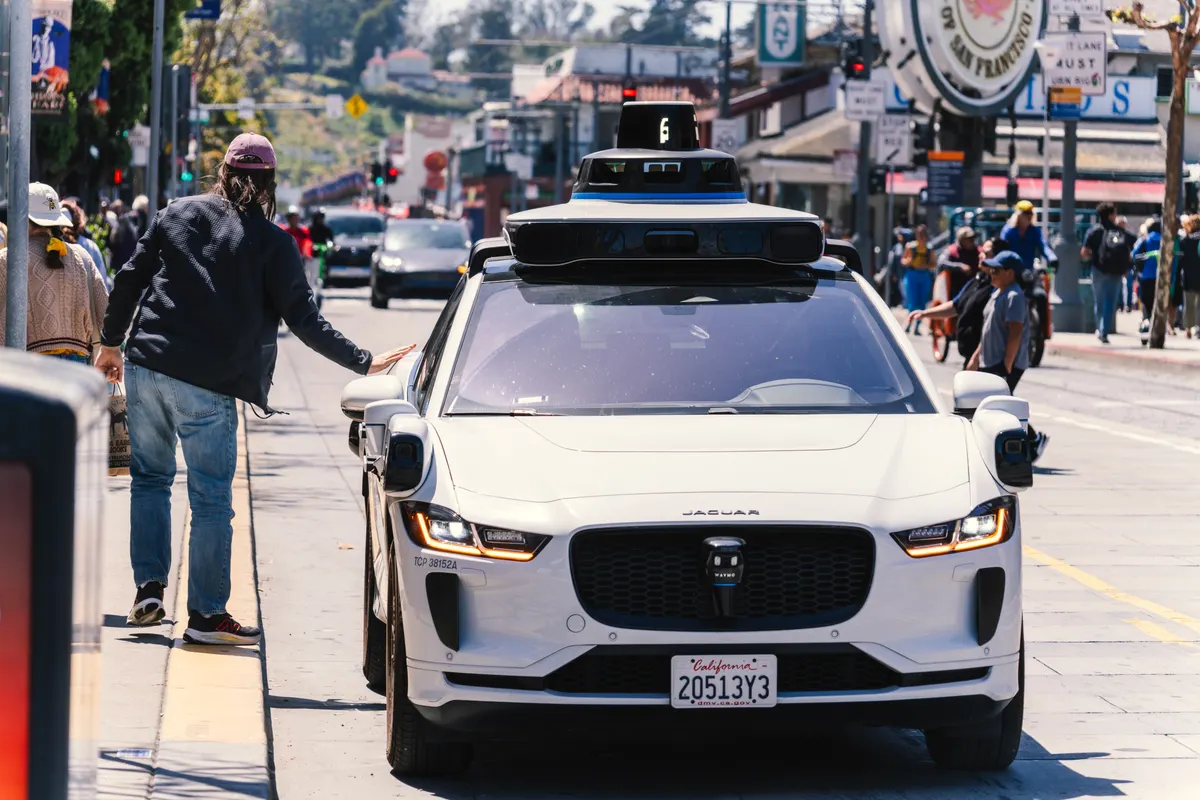
Not every deal is ageing well. The Waymo partnership, the one that gave Uber its most credible near-term robotaxi story, has contracted. The two companies have ended their Phoenix arrangement, and Waymo is now pushing to exit its Uber contract early; that agreement runs until May 2028. Having Waymo, the world’s most operationally mature robotaxi service, effectively trying to disentangle itself is not the narrative Uber would prefer.
Cruise is the starker example. GM’s robotaxi unit struck a strategic deal with Uber in August 2024, only for GM to shutter Cruise’s robotaxi operations entirely by December 2024. The partnership dissolved with it.
On the more optimistic side, Wayve’s Series D round brought the UK startup a post-money valuation of $8.6 billion and lifted its total funding across four rounds to $2.8 billion, with backing from Eclipse, Balderton Capital, and SoftBank Vision Fund 2 alongside Uber and Microsoft. Reuters reported that Wayve chief executive Alex Kendall has outlined plans to deploy robotaxis with Uber across 10 cities globally in 2026. The contingent element of Uber’s commitment, another $300 million triggered by actual deployments beginning in London, is the part worth watching: milestone-based capital is only worth as much as the milestones.
The broader portfolio tells its own story. Uber is not trying to back one winner; it is backing most of the field and providing the network through which whichever technology eventually works can actually reach passengers. Aurora, WeRide, Avride, Motional, Pony.ai, Momenta, Zoox, Verne, MOIA, May Mobility, Rivian, Wayve: the list reads less like a strategic thesis and more like a structured hedge.
That is probably fine if even two or three of these relationships reach durable commercial scale. The May 2028 expiry of the Waymo contract is the first real deadline that separates aspiration from evidence.
