
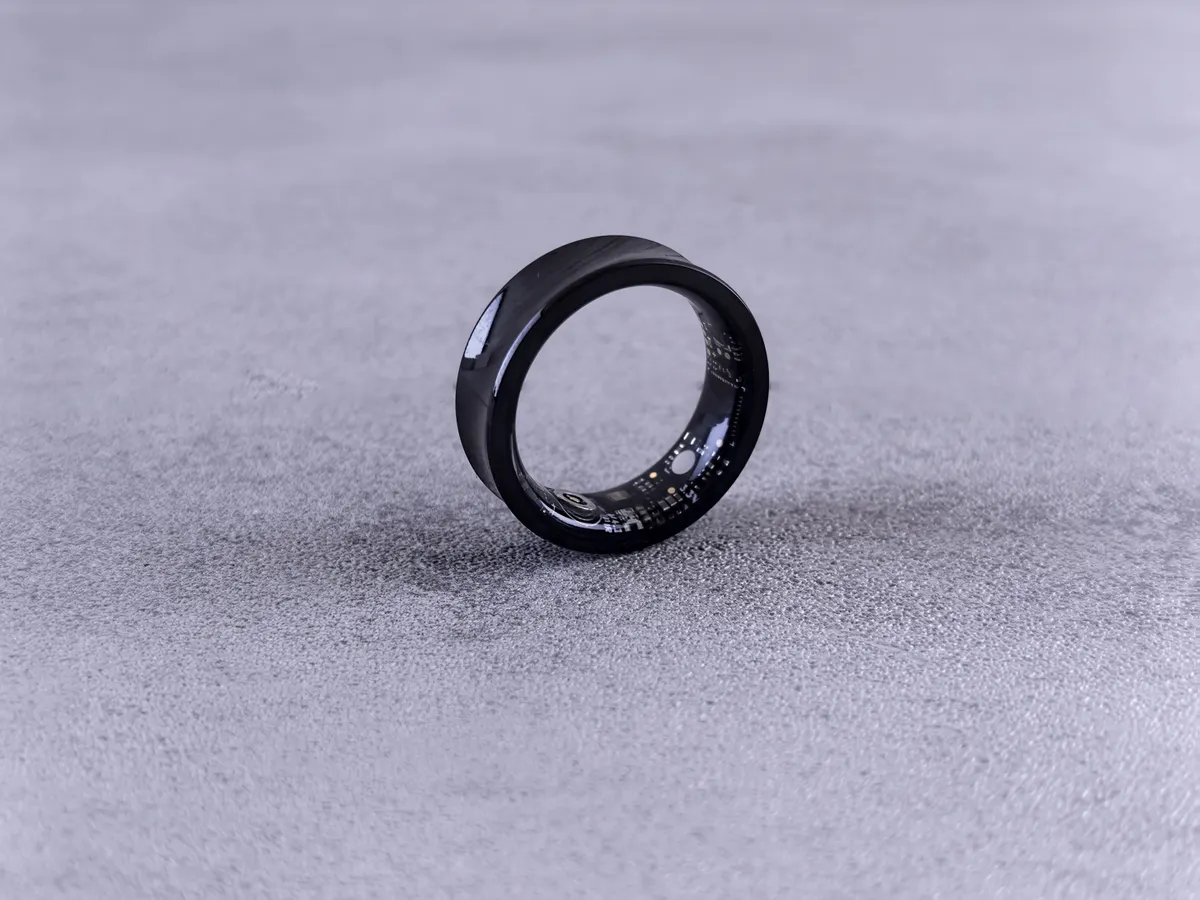

The Oura smart ring IPO is officially in motion: the Finnish health-wearables company filed its S-1 with the Securities and Exchange Commission on 3 September, setting its sights on a Nasdaq Global Select Market listing under the ticker OURA. The timing is pointed. After years as the undisputed leader in a niche that has suddenly become very crowded, Oura is moving to lock in its market position before rivals with fresh capital and fresh ideas fully arrive.
The Financials Look Strong, With One Line Worth Noting
Revenue for the nine months ended 30 June nearly doubled to $1.21 billion, with net income reaching $60.77 million and adjusted EBITDA of $106.65 million for the same period, according to TechTimes reporting on the S-1 filing. For full fiscal year 2025, Oura posted $907.9 million in revenue, more than doubling from $406.8 million the prior year, while recording net income of just $12,000, essentially breakeven.
There is a figure in Oura’s SEC S-1 filing that deserves attention alongside the growth charts: as of 30 September 2025, the company carried an accumulated deficit of approximately $623 million. That is the tab from years of investment-heavy growth, and it is the context public-market investors will weigh against the more flattering recent trajectory.
It also helps to know who has already been paid. According to TechTimes, early investors cashed out approximately $1 billion before the public offering. Oura’s October 2025 Series E round attracted a heavyweight roster: Fidelity Management and Research, ICONIQ, Whale Rock, Dexcom, Temasek, and others. The round’s size is reported slightly differently across outlets: CNBC puts it at $900 million and places Oura’s valuation at $11 billion; TechTimes cites $875 million. Both treat the Series E as the same event; CNBC’s figure is used here. Yahoo Finance, publishing the company’s own announcement, noted that Oura had confidentially submitted a draft registration statement on 21 May 2026, ahead of the public filing.
The Oura Smart Ring IPO’s Backdrop: A Fast-Growing Market and a Patent War Already Won
Oura held approximately 76.4% of the global smart ring market in 2025, when the sector was valued at around $697.6 million, according to TechFundingNews. That market is projected to reach $7.8 billion by 2035. CNBC also reported a 42% jump in Garmin’s fitness product revenue in the first quarter of 2026, attributed to strong demand for advanced wearables, useful context for the appetite Oura is hoping to convert into public-market enthusiasm.
Before any of these competitors could properly challenge Oura, though, they had to get past its lawyers. In October 2025, the International Trade Commission’s final ruling barred both Ultrahuman and RingConn from importing smart rings into the United States, effective 21 October 2025. The case centred on U.S. Patent No. 11,868,178, titled ‘Wearable computing device,’ according to Law360. Both companies applied to stay the orders; both applications were denied. The outcome was confirmed in an Oura press release distributed by BusinessWire.
The Challengers, Undeterred
Ultrahuman moved fastest to adapt. Its $479 Ring Pro was redesigned specifically to work around Oura’s patent, featuring a new heart-rate sensing system and a dual-core processor. On 3 September 2026, the same morning the Oura smart ring IPO filing dropped, Ultrahuman announced a $70 million financing round, backed by Qualcomm Ventures, Labcorp, Alpha Wave, and others.
According to Yahoo Finance republishing a TechCrunch report, Ultrahuman’s annual revenue run rate stands at $140 million, up roughly 45% year on year, with ambitions to reach $200 million by January 2027. The company has sold approximately 800,000 rings and is not yet profitable. Only about 12% of users pay for PowerPlugs, its subscription software tier. The round was structured as $65 million in equity and $5 million in debt, valuing Ultrahuman at $365 million, roughly three times its 2023 valuation of approximately $120 million, according to an aggregator citing TechCrunch.
The other challengers are each betting on a different angle. French company Circular is pushing into payments with its Ring 3 series, featuring NFC-based contactless payments and haptic alerts. RingConn’s Gen 3, priced from $349, leans on vascular health tracking and vibration alerts. Samsung’s Galaxy Ring, at $399, plays to ecosystem loyalty over feature depth. Dreame, newer still, is pitching a ring with a physical touchpad for controlling your phone.
The direction of travel is clear. The Oura smart ring IPO will test whether investors believe the company with approximately 5 million paid members and the strongest brand in the category can hold 76% of a market that every well-funded competitor now desperately wants a piece of. With Ultrahuman’s valuation tripling in roughly three years, the race is no longer theoretical.
