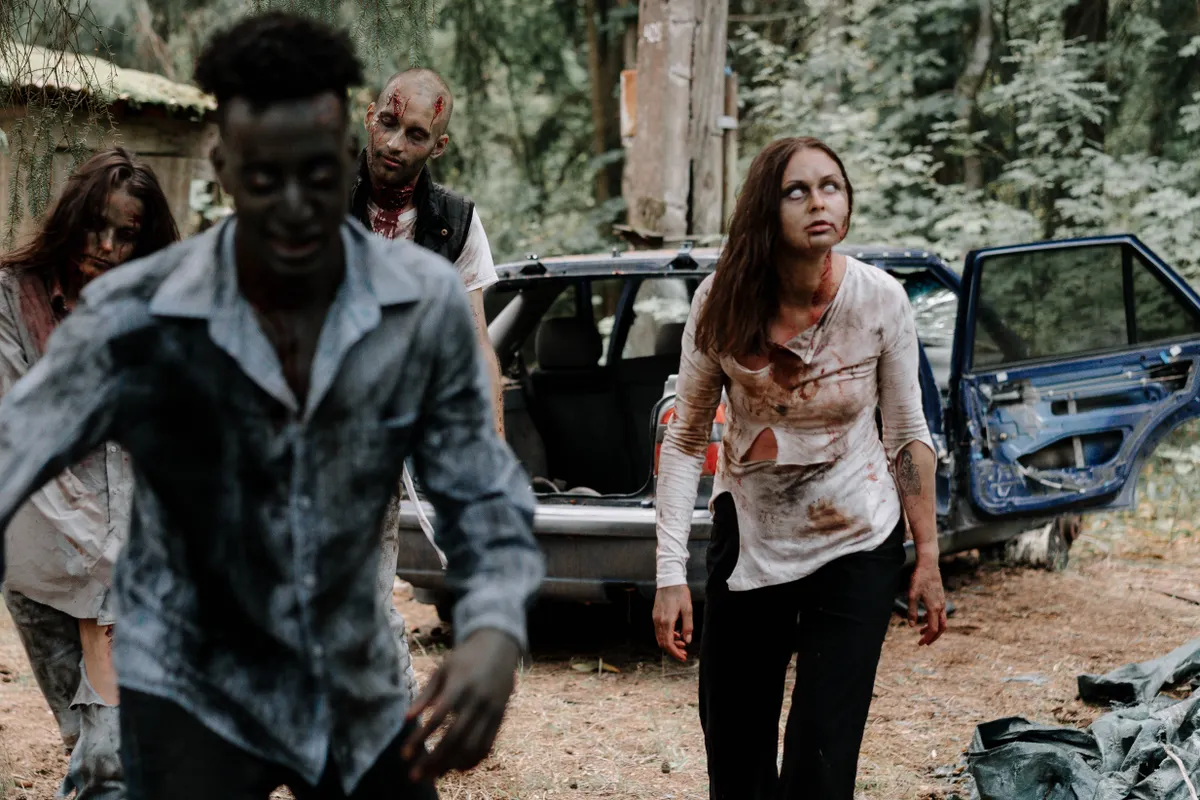

The Walking Dead streaming deal between Netflix and AMC Global Media carries a reported $500 million price tag and covers all 371 episodes across the original series and its six spin-offs, the companies announced Thursday alongside AMC Global Media’s quarterly earnings report.
The agreement is structured as a five-year licence, with the content fee payable quarterly. On a present-value basis, recognised revenue is expected to total approximately $445 million, according to a StockTitan summary of AMC Global Media’s 10-Q filing.
Netflix has held exclusive US streaming rights to The Walking Dead since 2011. That era is now over: under the new arrangement, Netflix gains co-exclusive rights, sharing access with AMC+. The franchise’s global footprint also expands, with Netflix adding the UK, Italy, Australia, and New Zealand to its coverage from 2027.
What the Walking Dead Streaming Deal Actually Costs AMC
The headline number looks generous, but the surrounding financials tell a more complicated story. AMC Global Media posted net revenues of $547 million in Q2, down 9% year-on-year, with operating income of $16 million and adjusted operating income of $46 million, down 75% and 58% respectively year-over-year, per The Hollywood Reporter.
Management used the Netflix announcement to raise forward guidance, projecting $200 million to $225 million in high-margin licensing revenue from the agreement in each of 2026 and 2027, with a significant portion expected to be recognised upfront, according to a StockStory analysis of the Q2 earnings call. That is the deal doing the heavy lifting in an otherwise soft quarter.
On the balance sheet, AMC Global Media ended June 30, 2026 with $464.0 million in cash and cash equivalents, generated first-half 2026 free cash flow of $108 million, and executed a $30 million accelerated share repurchase, all per the same 10-Q filing. Streaming now accounts for more than a third of the company’s domestic revenue, with AMC+, Acorn TV, and Shudder all contributing, according to The Hollywood Reporter’s Q2 coverage.
The company also rebranded from AMC Networks to AMC Global Media effective April 8, 2026, a name change that signals the pivot to direct-to-consumer as its organising strategy, per Media Play News.
A $200 Million Settlement Hanging Over the Franchise
There is one more number worth keeping in mind. AMC Networks previously reached a $200 million settlement with former Walking Dead showrunner Frank Darabont and talent agency Creative Artists Agency, announced July 16. The settlement includes future streaming video revenue-sharing for the original series and Fear the Walking Dead, according to Media Play News. In other words, some of whatever Netflix pays flows back out the door before AMC Global Media gets to keep it.
That context matters when evaluating how transformative the Netflix deal really is. The gross licensing figure is eye-catching. The net position, after a nine-figure settlement with revenue-sharing provisions attached, is a different conversation.
For a sense of scale, the snippet’s comparison to the Friends deal holds up reasonably well: HBO Max paid $425 million to pull Friends from Netflix in 2020. The Walking Dead arrangement, at $500 million for 371 episodes spread over five years, is in the same neighbourhood, though the co-exclusive structure rather than a straight platform migration makes it structurally different.
The two companies are not strangers. Netflix and AMC already had an existing content agreement covering a number of other AMC programmes, which was renewed last year before this Walking Dead-specific deal was layered on top, per The Hollywood Reporter.
From Netflix’s side, the logic is fairly transparent. Recent data cited in the original announcement suggests a meaningful share of its subscribers do not return for second seasons of newer programming. A franchise with hundreds of episodes and a built-in audience is a reliable hours-engine by comparison. Walking Dead streaming deal economics aside, the shift from exclusivity to co-licensing may also signal where studio-platform negotiations are heading more broadly: studios keeping a seat at the streaming table rather than ceding it entirely.
Beginning in 2027, the full slate of spin-offs arrives on Netflix globally, including Fear the Walking Dead, World Beyond, Tales of the Walking Dead, Dead City, Daryl Dixon, and The Ones Who Live. Dead City is currently returning for its third season; the final season of Daryl Dixon is scheduled to premiere in 2027. Whether that content calendar sustains the deal’s financial promise is the question AMC Global Media’s next earnings call will need to start answering.
