
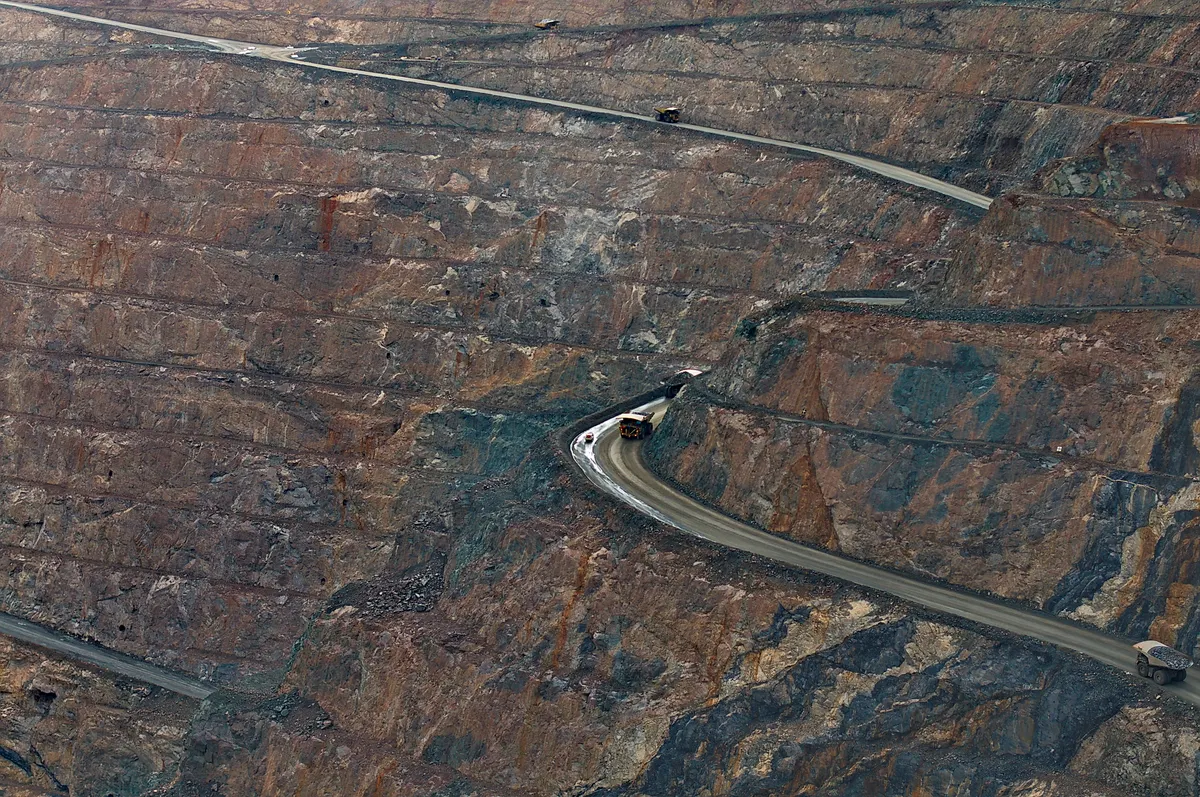

Caterpillar AI deployment has a different origin story than most: instead of starting with a chatbot or a recommendation engine, it started with a haul truck in a mine. The industrial giant spent decades automating some of the most hazardous and remote worksites on earth before it ever tried to put a voice assistant in a field technician’s hands, and that sequencing matters.
From Mining to Construction: The Logic of Caterpillar AI Deployment
The company’s push into autonomy grew out of mining, where labour shortages and dangerous conditions made the case for automation almost self-evident. Today, Caterpillar sells automated haul trucks, drilling systems, underground loaders and dozers, alongside a software command centre, fleet management tools and remote terrain intelligence. A real-world example of that expansion: Caterpillar has agreed with Carmeuse, a global lime and limestone producer, to deploy its autonomous hauling solution at the Carmeuse Drummond Island quarry in Michigan.
‘Now we’re in this super exciting time where we can take all of that learning from mining and bring it into much more dynamic environments, jobsites, quarries, and construction sites,’ CTO Jaime Mineart told TechCrunch at the Ai4 conference in Las Vegas.
In January 2026, Caterpillar formalised that direction at CES, unveiling the Cat AI Assistant and simultaneously previewing five autonomous machines designed for complex construction environments, describing construction as ‘the next frontier in autonomy.’ The company also disclosed a collaboration with NVIDIA at the same event, aimed at accelerating its ability to turn machine data insights into operational action.
The Cat AI Assistant itself is more than a search interface. Built on what Caterpillar calls its Helios unified data platform, it draws on 1.6 million connected assets globally and more than 16 petabytes of structured data. Chief Digital Officer Ogi Redzic described the platform this way: ‘Caterpillar’s strong digital foundation, including our Helios data platform that manages over 16 petabytes of data, is helping us move fast and deploy new AI capabilities.’ The tool lets field technicians use voice commands to pull up repair procedures, troubleshoot faults, and identify parts before a repair begins. Mineart confirmed it is now in use by customers, operators and technicians.
Caterpillar is also running AI across its enterprise, using it to generate digital twins in manufacturing and to modernise software. ‘We use AI agents to modernize legacy code, generate and test new software, and identify defects earlier,’ Mineart said. The company can buy, maintain, manage and operate equipment ‘no matter where they are,’ per the CES announcement.
The Harder Problem: Changing How People Work
Mineart is unambiguous that the technology itself is not the hard part. ‘The hard part about autonomy and about physical AI is incorporating that technology into the customer jobsite and into the workflows,’ she said. Companies have to rethink how people work alongside machines, not just deploy the machines themselves.
Caterpillar leans on experienced operators to train its AI systems, capturing institutional knowledge built over decades. As machines grow more autonomous, some operators will shift from controlling a single machine to overseeing multiple units from a remote command centre. That transition puts pressure on a workforce of 118,000 employees.
The company’s response is the Caterpillar Building the Future Workforce Initiative, announced in April 2025 as part of its centennial celebration: a pledge to spend $100 million over five years on training in AI, autonomy, robotics and, according to Manufacturing Dive, digital twins and machine learning models. Up to $5 million of that total is earmarked specifically for Texas, in collaboration with local organisations and educational institutions to build training pipelines for advanced manufacturing and industry technician roles.
The Revenue Case Is Already Being Made
The financial rationale for all of this is not hard to follow. According to Caterpillar’s Q2 2026 SEC earnings release, quarterly sales and revenues reached $20.5 billion, up 24% year-over-year, the first time in company history Caterpillar has crossed $20 billion in a single quarter. Adjusted profit per share came in at $8.17.
Power generation was the standout: the division posted a 72% sales spike to $3.10 billion, driven by demand for equipment used in data centres. CEO Joe Creed stated that ‘no one is slowing down’ on cloud computing and generative AI infrastructure. Utility Dive reports that Caterpillar’s total order backlog stood at $72 billion as of Q2 2026, with power and energy customers placing orders through 2030 and gas prime power orders extending into 2029.
The workforce investment is both a people programme and a bet that Caterpillar can keep converting that backlog into delivered, autonomous, AI-enabled machines. With construction autonomy now the stated next frontier, the queue of environments still to automate is long, and the orders suggest customers are not waiting to find out whether it works.
