
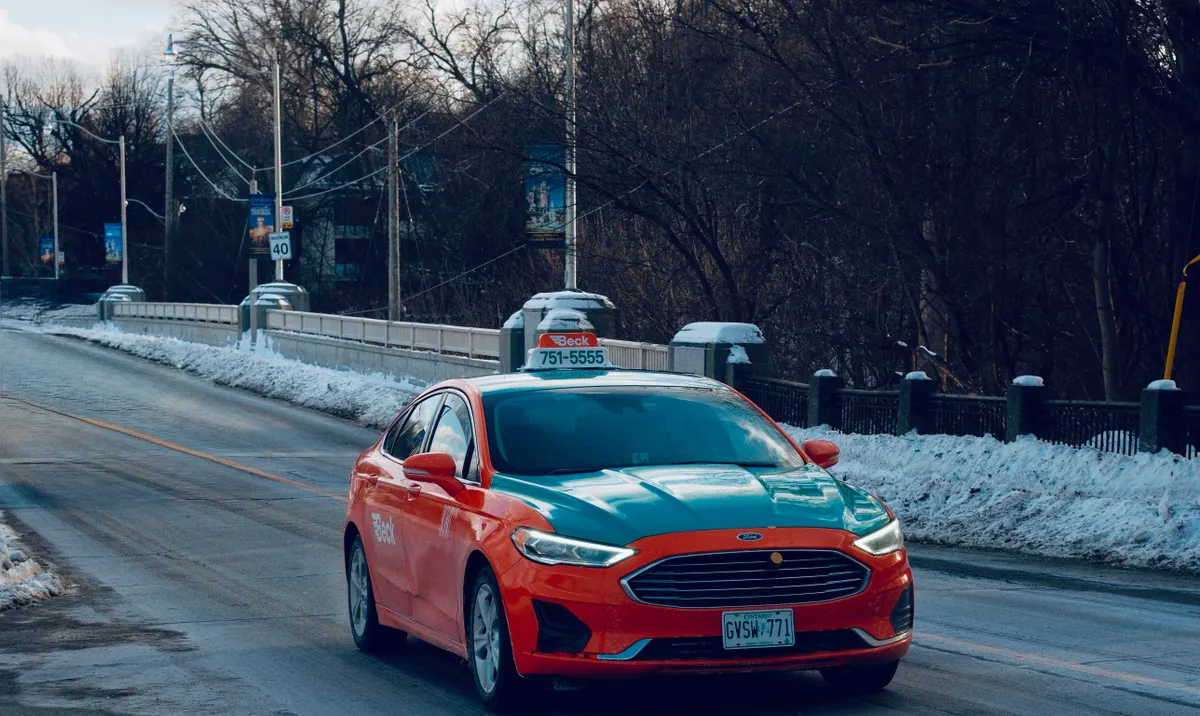

The Zoox NHTSA commercial exemption, granted on 31 July 2026, does more than let one Amazon-owned robotaxi company start charging fares. It sets the template for every autonomous vehicle maker that wants to put a people-mover on public roads without a steering wheel or pedals.
Zoox CEO Aicha Evans called it ‘the first-ever commercial exemption for a purpose-built robotaxi from NHTSA,’ and the phrasing matters. Previous exemptions let the company demonstrate its technology; this one lets Zoox charge for rides, starting 10 August, across up to 2,500 vehicles introduced into commerce annually, for a period of two years.
What the Zoox NHTSA Commercial Exemption Actually Covers
The waiver spans portions of eight Federal Motor Vehicle Safety Standards: windshield defrosting and defogging (FMVSS 103), windshield wiping and washing (104), lamps and reflective devices (108), rear visibility (111), light vehicle brake systems (135), occupant protection in interior impact (201), glazing materials (205), and occupant crash protection (208). In plain English: all the standards written with a human driver in mind who can see out of a windscreen and reach the brakes.
Zoox filed its original commercial exemption application on 22 August 2025, so the process took roughly eleven months. NHTSA says its oversight will operate under an ‘enhanced, adaptable oversight structure that can evolve as Zoox’s technology advances,’ which is a polite way of saying regulators are writing the rulebook in real time.
Tesla’s Cybercab is the most obvious next beneficiary. Any two-seater robotaxi built without traditional controls will need a similar carve-out. The Zoox NHTSA commercial exemption is now the proof-of-concept that such a carve-out is achievable, and the FMVSS standards list above is essentially a checklist for whoever applies next.
Moove Raises $250 Million to Build the Infrastructure Layer Behind the Robotaxis
While the regulatory machinery whirrs, the fleet-management layer of the AV economy is attracting serious capital. Moove, the Dubai-based mobility company, closed a $250 million Series C at a $2.1 billion valuation, led by Mubadala Investment Company with Woven Capital (Toyota’s Growth Fund) and Ion Pacific as co-leads.
The full investor syndicate, as disclosed in the Mubadala announcement, also includes BlueCrest Capital Management, Sona Capital, and The Raptor Group, alongside existing backers BlackRock, MUFG, Franklin Templeton, Uber, Left Lane, Square Associates, The Latest Ventures, and the Ontario Power Generation Pension Plan, according to PR Newswire.
Moove operates a 42,000-vehicle fleet across 13 countries and already runs the fleet for Waymo in Phoenix, Miami, and Las Vegas, with London to follow. The fresh capital goes towards scaling its autonomous fleet management business, hiring roughly 350 people, and building what the company calls ‘Nests’: robotics-first depot facilities where autonomous vehicles are charged, serviced, maintained, and orchestrated for continuous operation. Moove also plans to grow its AV-focused workforce by more than 220% before the year is out.
One wrinkle: Moove plans to purchase Waymo robotaxis directly and already owns the robotaxi assets of an unnamed company. Fleet operator becoming fleet owner is a meaningful step up the value chain.
Hadrian’s $1.37 Billion Round Pulls in JPMorganChase
Defence-tech manufacturer Hadrian raised a $1.37 billion Series D at a $7.87 billion valuation. The snippet named WCM Investment Management, Washington Harbour Partners, Valor Equity Partners, 137 Ventures, and Baillie Gifford as lead investors. What it left out: JPMorganChase’s Strategic Investment Group was an anchor co-lead, investing via the firm’s Security and Resiliency Initiative, a programme dedicated to industries critical to national and economic security.
Other participants include 1789 Capital, Morgan Stanley Wealth Management, funds managed by Apollo and T. Rowe Price, CapitalG, Andreessen Horowitz, Founders Fund, Lux Capital, and Altimeter, according to TechCrunch’s Series D coverage. Hadrian’s prior round was a $260 million Series C led by Founders Fund and Lux Capital roughly a year earlier, bringing total capital raised to approximately $2 billion as estimated by PitchBook.
The Bigger Picture
Uber CEO Dara Khosrowshahi has said the company would commit $10 billion ‘over the coming years’ to deploy 120,000 driverless vehicles, a figure the Financial Times had independently calculated before he confirmed it on the earnings call. Lucid Motors is now banking on a robotaxi programme with Uber and Nuro, though its midsize Cosmos EV has slipped to the second half of 2027. Travis Kalanick’s startup Atoms, fresh off a $1.7 billion raise, is partnering with Joby Aviation to build transportation hubs in Florida, New York, Texas, and California.
The common thread: capital is moving fast, but the NHTSA exemption is the gating item. Everyone waiting on a steering-wheel-free launch now has a federal precedent to point to. The queue forms here.
