
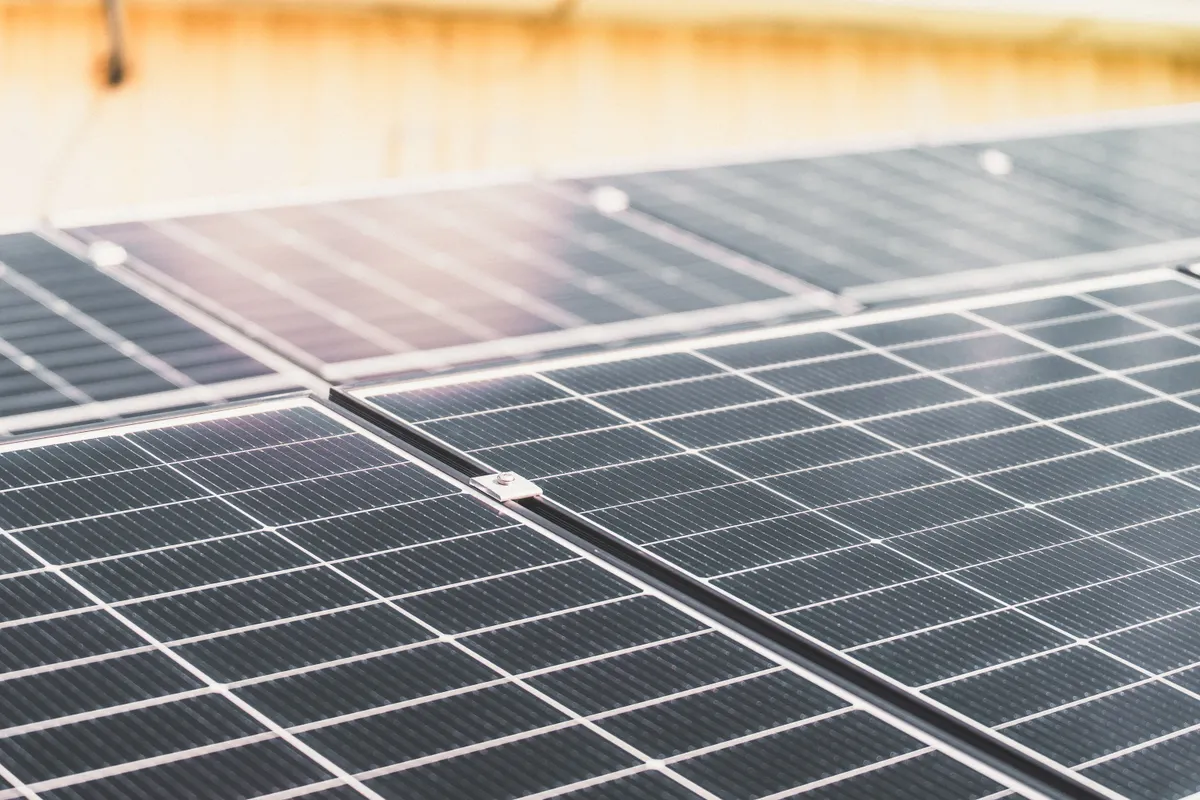

Gritt solar robot funding reached $34 million as the start-up emerged from stealth, led by a $26 million Series A from Obvious Ventures, with Union Square Ventures and Active Impact Investment also participating. The company’s pitch is straightforward: solar farms need workers, workers are scarce, and AI-controlled robots mounted on rented construction equipment can fill the gap. Whether the market buys the vision depends on whether the field results hold up at scale.
One caveat upfront on the funding figure: The Next Web and FinSMEs put Gritt’s total raised at approximately $32 to $32.4 million, while the original report and Dealroom cite $34 million. The discrepancy has not been publicly resolved; this article uses the $34 million figure from the source of record.
Why the labour math matters for solar construction
The timing is not accidental. Approximately 41% of the U.S. construction workforce is projected to retire by 2031, with the industry needing an estimated 349,000 net new workers to keep pace, according to TechCompanyNews. Solar installation sits squarely in that shortfall: it is outdoor, physical, and remote, which makes it hard to staff and harder still to retain workers.
Gritt’s answer is to skip the expensive path of building custom robots and instead bolt its AI software onto equipment already present on construction sites. Robotic arms go onto standard skid steers and forklifts, according to The Next Web, with arms currently sourced from manufacturers including Kawasaki. The system picks up large glass solar panels, carries them to the metal frames, and positions them with sub-millimetre accuracy so human workers can fasten them in place.
The productivity claims are the number that will get sceptics leaning forward. CEO Puneet Puri says a typical eight-person crew installs around 800 panels a day unassisted. Working alongside Gritt’s systems, that same crew can install 3,000 to 4,000 panels a day. The company is now contracted to help install 2.8 gigawatts of solar panels over the next 18 months, with customers including three of the top ten U.S. power construction companies.
Gritt currently has two systems deployed. It is aiming to have 48 in operation within six months. Going from two to 48 is the kind of ramp that will make or break the thesis, and the company is sensibly quiet about exactly how it gets there.
Gritt solar robot funding and what the money is actually for
Beyond the venture rounds, Gritt also picked up a non-dilutive boost: approximately $500,000 from the U.S. Department of Energy’s American-Made Solar Prize, Round 7, in 2024, per TechCompanyNews. It is a modest sum relative to the Series A, but government validation of this kind tends to open doors with utility-scale buyers who want someone else to have already stress-tested the technology.
The Series A itself lands in the top 40% of comparable deals by size, according to Dealroom. The earlier seed round, for context, is estimated at approximately $6.4 million based on publicly available funding data tracked by Toflow.ai, with backing from First Round Capital, Climactic, Congruent Ventures, and VSC Ventures.
Andrew Beebe, the Obvious Ventures partner who led the round, put the founder profile this way: ‘There are people who used to build rockets that went into space and had infinite budget for the smallest little part, and then there are people who know what it means to get into dirty, dull, and dangerous jobs and scale them like mad. These guys are in the second camp, and that’s a special kind of entrepreneur that has the technical chops, the AI, and the machine vision skills to make it work.’
Gritt’s founders, CEO Puneet Puri and CTO Vishal Dugar, both trained at Carnegie Mellon. Puri’s stated ambition goes well beyond solar: ‘Our thesis is that if we truly want to speed up construction, you need an intelligence which can work in the outdoor, chaotic environments of these construction sites, and it has to be generalizable enough that it can work in these varied environments.’
The company is already thinking past panel placement. Its systems autonomously handle verification and site planning tasks in addition to the physical labour, according to FinSMEs. Longer term, Gritt wants to expand into data centres, bridges, and roads, with rebar-tying and rack construction among the nearer-term additions to the task list. Training the system to stack cinder blocks took weeks; a rebar-tying demo took a single day using the same underlying software pipeline.
Competitors including Luminous Robotics, Cosmic, and China’s Trinabot are building their own hardware from the ground up. Gritt’s off-the-shelf approach costs less to deploy but hands hardware risk to third-party suppliers. Which model scales more cleanly is still an open question, and 2.8 gigawatts over 18 months is the test that will start to answer it.
