
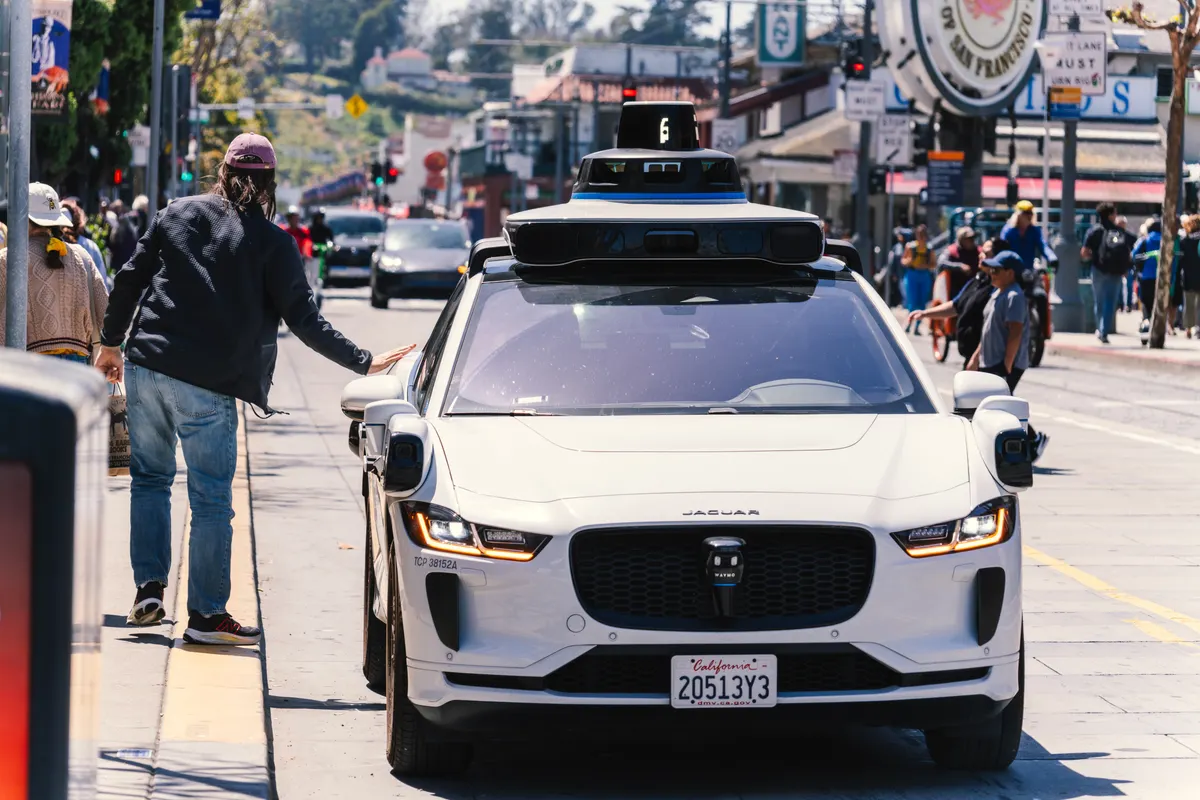

The battle over DC robotaxi rules has put Uber and Waymo on opposite sides of a legislative fight that will shape how driverless vehicles operate in the US capital, even as Uber simultaneously rewrites its own future with a $14.8 billion deal to acquire Germany’s Delivery Hero.
The DC Robotaxi Rules Both Sides Are Fighting Over
The legislation at the centre of the dispute is the Autonomous Vehicle Deployment Authorization Amendment Act of 2026, introduced on 1 May 2026 by three DC Council members including Ward 6 Councilmember Charles Allen. Under current DC law, commercial AV operation is entirely prohibited; any testing must include a safety driver ready to take control.
The proposed bill would change that, but at a price. Under its terms, Level 4 and Level 5 autonomous systems would require permits for both testing and commercial use, with no AV permitted on public roads without one. The fees are steep: a $1 million application fee, a $5 million permit fee, a mandatory 180-day and 250,000-mile testing requirement, and a $0.15-per-mile tax.
Tesla’s senior policy adviser India Herdman raised objections shared across much of the industry, including the argument that testing miles accumulated in other jurisdictions should count toward the mileage threshold. For companies still building their DC testing hours, those costs and timelines are a real barrier.
Waymo, though, has already been testing with human safety operators in Washington and has surpassed both the 180-day and 250,000-mile thresholds. If the bill passed today, Waymo would enter the DC market with at least a six-month head start on every competitor still trying to clock up the required miles.
Uber’s response has been to push a different model entirely: a “hybrid” system that would require robotaxis to operate on ride-hailing networks alongside human drivers. Insiders say it has little realistic chance of becoming law. But the lobbying rationale is clear. Uber argues the bill as written would displace for-hire human drivers and effectively hand Waymo a de facto monopoly, given how far ahead its DC testing programme already is.
A DC Council hearing drew representatives from Lyft, Tesla, Uber, and Waymo, alongside disability rights advocates, labour unions, highway safety organisations, and think tanks. The broad consensus from industry was opposition. Waymo was among the few that broadly supported the bill as written, which is hardly a surprise given its head start.
Uber’s Delivery Hero Deal: The Numbers Behind the Headline
Away from the policy fight, Uber has been constructing a much larger deal. The Uber investor relations press release confirms the offer values Delivery Hero shares at €41.50 per share in cash, with the equity value for 100% of the company put at $13.7 billion after accounting for Uber’s prior stake purchases. The headline figure of $14.8 billion reflects the broader transaction value.
The combined platform would have generated $236 billion in pro-forma Gross Bookings across 99 markets in 2025, according to the Nasdaq-published announcement. The 50 markets Uber is acquiring contributed $42 billion of that total.
Delivery Hero will separately sell its operations in 14 overlapping markets, including Spain, Austria, Norway, and Sweden, to New York-based SSW Partners for $1.6 billion. Those 14 markets generated $11 billion in Gross Bookings in 2025. The split is designed to head off regulatory objections in the markets where Uber Eats already competes directly with Delivery Hero.
To fund the cash consideration, Uber has put in place a committed bridge facility of approximately €14 billion, supplementing its existing cash reserves. The offer requires a minimum acceptance of 50% plus one share (including Uber’s existing ownership) and is targeted to close in the second half of 2027.
Delivery Hero’s management and supervisory boards have unanimously backed the offer and intend to recommend shareholders tender into it, subject to review of the formal Offer Document. Regulatory clearance across multiple jurisdictions will be the main variable between now and closing.
Uber has also committed to investing €2 billion in Germany over five years and will retain Delivery Hero’s Berlin headquarters and workforce at least through 2029, according to Uber’s 8-K filing. A EUR 700 million break fee is payable by Uber’s bidding entity if key regulatory conditions go unmet despite others being satisfied; Delivery Hero faces a EUR 200 million termination fee in competing-offer scenarios.
Between the Bloomberg Law report noting ten Big Law firms involved in the transaction and the deal’s multi-continent regulatory path, the second half of 2027 closing target may prove optimistic. But by the time Uber clears that hurdle, it will also want to know which side of the DC robotaxi debate is still standing.
