
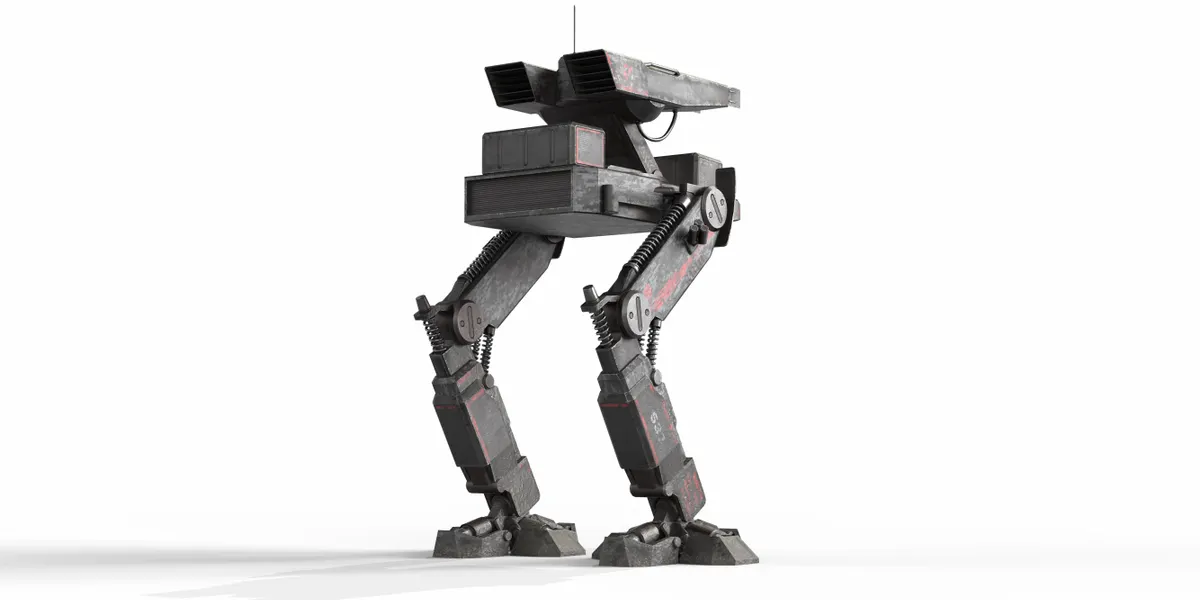

Forterra Lancer autonomous vehicles have completed more than 1,100 combat-support missions in Ukraine, the company confirmed, in what it describes as the largest deployment of autonomous ground vehicles in combat by any US defence-tech firm. That’s a bigger claim than most keynotes produce, and this time there are live-fire receipts to back it up.
According to Forterra’s official press release, exactly 105 Lancer vehicles were manufactured and delivered under a US government programme, with full delivery completed in under six months. The Lancer is built on the Polaris RANGER XD 1500 platform and fitted with Forterra’s AutoDrive autonomy platform and Vektor communications system.
What the Forterra Lancer Autonomous Vehicles Have Actually Done
The numbers from nine months in the field are worth sitting with. The fleet has driven more than 2,500 miles, carried 777,440 pounds of cargo, and completed 52 casualty evacuations. Ukrainian domestic UGVs are typically battery-powered and limited to 250 kilograms of payload; the gas-powered Lancer manages 750 kilograms, which is why one Ukrainian soldier quoted in the original reporting called it ‘the most important UGV in Ukraine.’
Getting there wasn’t automatic. Ukrainian forces were initially cool on the vehicles, finding them too calibrated to the US Army’s specifications. The fix that turned things around was practical rather than technical: bolting on a Starlink satellite internet antenna. Once that happened, the Lancer became genuinely useful rather than impressively specced.
Some vehicles have been lost, particularly when stuck in deep mud where Russian forces can engage them at leisure. That attrition has produced one clear demand from Ukrainian operators: make them cheaper. ‘Attrition is just a fact of this battlefield, and we have lost a few at this point, and it hurt, and we need more, and therefore we need them cheaper,’ a Ukrainian soldier told the original reporters.
Autonomy’s Honest Limits
Here’s where the theatre-of-war field test diverges from the product roadmap. For now, soldiers have mainly been teleoperating the Lancers in active combat zones rather than letting the autonomy stack run unsupervised. The vehicles can navigate diverse terrain on their own, but they cannot yet identify unexpected enemy contact and respond appropriately. ‘We actually need to be able to respond to the enemy threats, live, while it’s in front of the enemy, which the autonomy doesn’t know how to do yet,’ the Ukrainian soldier explained.
That gap is exactly what Scott Sanders, Forterra’s chief growth officer and a former US Marine officer, predicted would exist. ‘I believe this to be true of every defense technology that’s ever been created,’ he said, ‘until you hit the realities of combat, you’re just not going to know.’
Forterra is working to close that gap by combining classical robotics algorithms with generative AI capable of reacting to novel situations. The obstacle is data: the scenarios a combat UGV encounters, from minefield navigation to weapons handling, simply don’t exist in open-source training sets. ‘You need to be able to turn the dials,’ Sanders said, ‘and some things more of a classical robotics approach, and then leverage AI where you need to.’
The Funding Picture and Who Else Is in the Race
Forterra has raised more than $500 million in venture funding overall. Its $75 million Series B, announced 10 September 2024, was more than 2.5x oversubscribed and co-led by XYZ Venture Capital and Moore Strategic Ventures alongside Hedosophia. According to Citybiz, citing an SEC filing, a subsequent $238 million Series C led by Moore Strategic Ventures pushed the company’s valuation above $1 billion; CEO Josh Araujo stated the funds would be used to double production to 1,000 systems the following year.
On the partnership side, BAE Systems has signed a partnership agreement with Forterra for autonomous ground vehicle development as part of multi-domain integration. John Borton, managing director of BAE Systems’ Weapons Systems UK business, put it plainly: ‘Autonomous systems are a necessity, not a luxury, for warfighters.’
Competitors are moving fast. In March 2026, Forterra entered its Lancer in the US Army’s xTech Edge Strike: Ground competition in Vilseck, Germany, competing against Dataspeed and Overland AI, both of which also fielded Polaris-based platforms. Meanwhile, Scout AI, founded in 2024, raised a $100 million Series A that the company describes as the largest defence-tech Series A in US history, having previously secured $11 million in Department of Defense contracts and a $15 million seed round. Scout AI is already among the 20 autonomy companies whose technology is being tested by the US Army’s 1st Cavalry Division at Fort Hood ahead of the unit’s expected 2027 deployment.
The race is real, the field lessons are accumulating, and the next question is whether full autonomy can close the gap before the price tag becomes the deciding factor. Ukraine is asking for more Lancers and asking for them cheaper. That’s the actual product brief now.
