
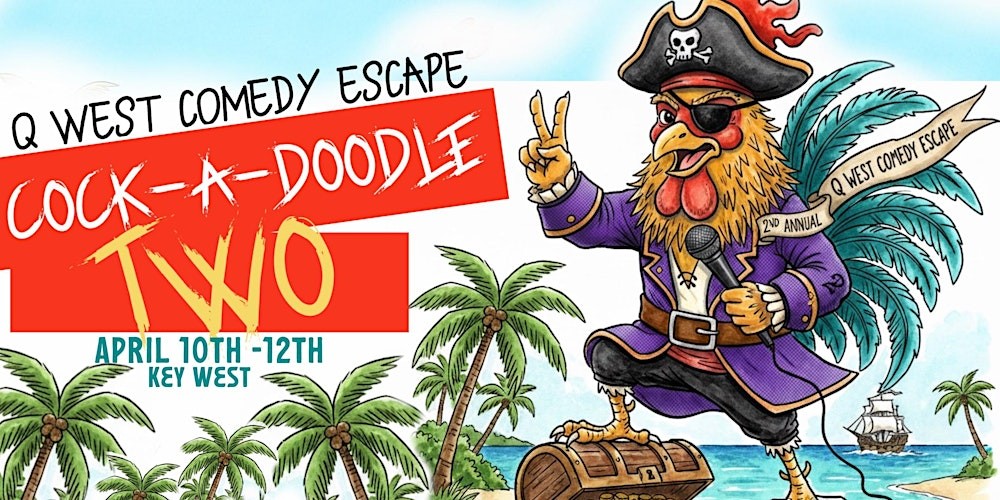

When Brian Quinn announced his Q West Comedy Escape last year, tickets vanished within hours. The $499-per-person packages for the Key West festival—limited to just 200 fans—sold out faster than most arena shows filling 5,000 seats. For the Impractical Jokers star, the math was simple: fewer people, bigger experience, stronger connections.
“This is a weekend straight out of the mind of Q and it is purposely limited in the amount of attendees allowed,” Quinn explained on the event page. The former New York City firefighter turned comedy icon wasn’t just creating another tour stop. He was building something intimate in his self-described “favorite spot in the world.”
Small is the New Big
The 200-person cap creates what luxury brands have understood forever: exclusivity sells. In an era when comedy specials stream free and memes circulate instantly, live access remains precious. Traditional comedy tours pack theaters, splitting profits with venues, promoters, and booking agents. A 5,000-seat show grossing $250,000 might net just 20-30% after expenses.
Quinn’s approach flips the model. With packages generating roughly $100,000 from 200 attendees, fixed costs stay predictable while profits per person climb. The Key West Theater serves as home base, with the Key West Hotel as official partner, consolidating logistics that usually fragment across multiple vendors.
Fans get “standup comedy, podcasts, screenings, interactive hijiinx, meet ups, bar crawls, music and more” across three days—transforming a two-hour comedy show into a weekend immersion. Attendees don’t just watch Quinn perform. They hang out with him in his favorite tropical escape, creating memories worth far more than the ticket price.
The Firefighter’s Touch
Before Impractical Jokers launched him to fame, Quinn spent seven years as an FDNY firefighter—work that shapes how he connects with people. “At the age of 36, Brian Quinn left the fire department to continue with the show,” according to Second Act Storied. That background taught him about trust, camaraderie, and showing up for people.
The festival embeds that ethos into its structure. Unlike traditional meet-and-greets that last five rushed minutes, Q West spreads interaction across meals, bar crawls, and spontaneous encounters. Key West’s compact size helps—the island is “small enough that you’ll always be minutes away from all the fun” regardless of where you stay, according to the event description.
This sustained access creates community among attendees themselves. Fans bond over shared experiences, forming connections that outlast the weekend. It’s the firehouse model applied to comedy: everyone’s in it together.
Beyond the Ticket Price
The festival generates revenue traditional tours can’t touch. Merchandise sales soar when fans spend three days together—attendees buy what they see others wearing, driving purchases that might never happen in a two-hour theater rush. Photography packages, exclusive content, and potential sponsorships add layers of income without requiring additional tour dates.
Research from Oxford Economics shows live event attendees spend big beyond tickets: “If an out-of-town attendee were to spend $100.00 on a concert ticket, the local economy would benefit from an additional $334.92 in spending.”
With fans traveling to Key West for three days, that multiplier effect benefits both Quinn’s operation and the local economy.
The model’s success is evident in its return. Quinn announced the 2026 edition with typical understatement: “Come have a blast with us in April, 2026,” he posted on X.
Why Other Comedians Are Watching
Comedy economics are shifting. Digital content floods the market for free, yet festival attendance keeps growing—up 12% beyond general tourism, according to industry research. Quinn’s boutique model offers a blueprint for performers caught between massive arena shows and tiny club circuits.
The catch? It requires an established fanbase. Impractical Jokers built that foundation over a decade-plus on television. “10 years of Impractical Jokers. We premiered on this night at this time 10 years ago. Wow. Thanks for sticking with us,” Quinn posted on X. That loyalty translates into fans willing to invest $500 and travel days for guaranteed access.
Newcomers face steeper climbs. Without proven fan dedication, charging premium prices for intimate festivals becomes risky. Geographic replication presents challenges too—Key West offers infrastructure and cultural cachet that secondary markets can’t match. “I want to do rolling parties with friends and fans in all my favorite places,” Quinn stated, positioning future festivals as selective events rather than mass expansion.
The Q West Comedy Escape proves that in comedy’s evolving landscape, bigger isn’t always better. Sometimes 200 people in the right place create more magic—and more revenue—than 5,000 in an arena. Quinn’s gamble on intimacy over scale is paying off, one tropical weekend at a time.