

The Anthropic Physical Intelligence deal rumour that lit up AI Twitter over the weekend turns out to have more substance than a gif denial suggested. According to The Information, the two companies did hold acquisition talks this spring, even if the specifics that spread across X were wrong in detail.
Physical Intelligence CEO Karol Hausman’s response to his own staff did not exactly project calm authority. He addressed the rumour via a Slack message containing a gif of a character from ‘The Office’ shaking her head no. Lachy Groom, the company’s president, did not respond to comment requests sent by Monday night. For a company reportedly not in play, the official line was somewhat minimalist.
What Physical Intelligence Actually Is
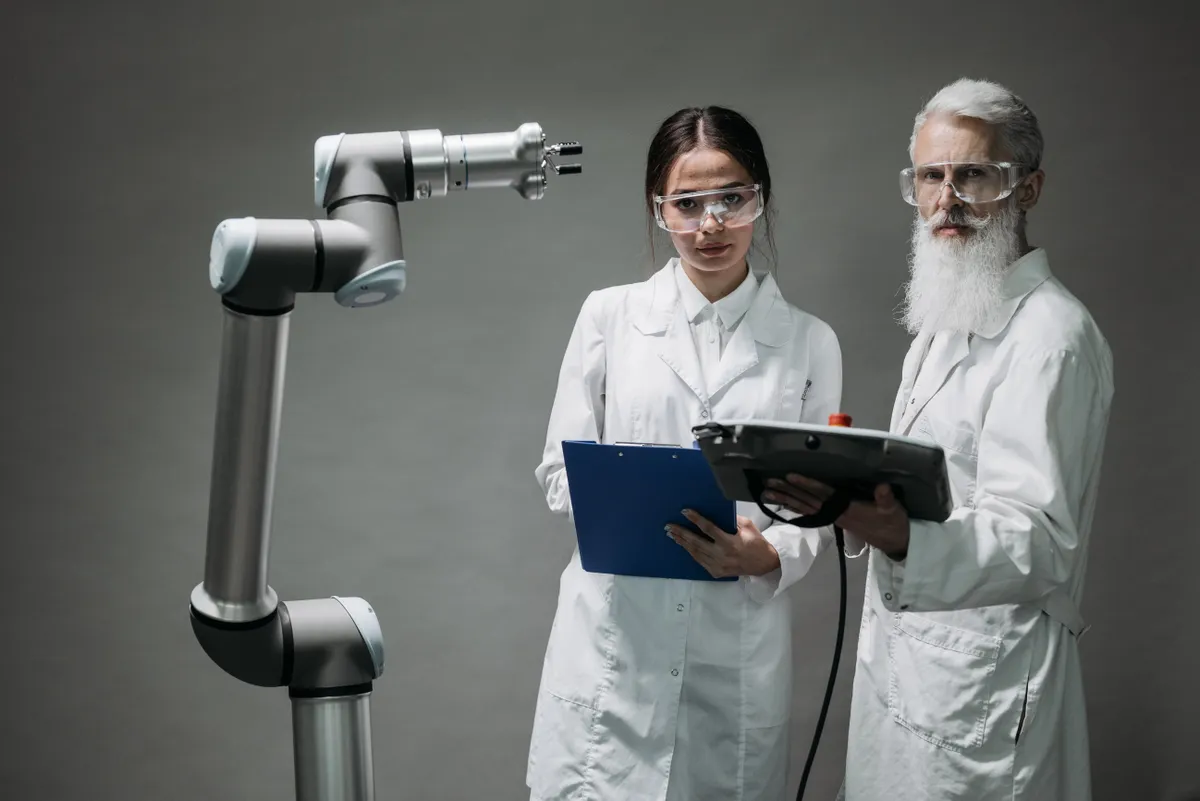
Physical Intelligence is not a niche robotics lab anyone would trip over by accident. The company was founded in early 2024 by seven co-founders, including Hausman (formerly of Google DeepMind), Groom (formerly of Stripe), Stanford professor Chelsea Finn, and UC Berkeley professor Sergey Levine, among others, according to RevenueMemo.
It has moved fast. The company launched its first model in late 2024, open-sourced it in February 2025, and has since advanced through π0.5, π0.6, and π0.7, with the latter released in April 2026. The snippet’s reference to π0.5 as ‘among the more widely used robot brains in robotics research’ is already a version or two behind.
Funding has kept pace with the model releases. An earlier round of $400 million brought in Jeff Bezos, Thrive Capital, and OpenAI as backers, according to Wired. That was followed by a $600 million Series B in November 2025, led by CapitalG, Alphabet’s growth investment arm, at a $5.6 billion valuation, with participation from NVIDIA, Sequoia Capital, OpenAI, and Lux Capital, per RevenueMemo. The company has also reportedly been in talks for a further $1 billion round at an $11 billion valuation.
OpenAI appears in both rounds. That is not a peripheral detail.
Why the Anthropic Physical Intelligence Deal Complicates Things for Both Sides
Anthropic has made four known acquisitions this year. Its interest in Physical Intelligence would make obvious strategic sense. Anthropic has no hardware lab, but it has been quietly probing the physical-world gap. Project Fetch last November put Claude to work helping non-experts programme a robot dog. A second phase in June found a newer model completing the same tasks roughly 20 times faster than the best human-plus-Claude team from the prior year. Buying a team with genuine robotics depth would compress years of that kind of exploratory work.
The broader logic holds across the sector. OpenAI shut down an early robotics group in 2021, with co-founder Wojciech Zaremba later saying the approach was missing pieces needed for real superintelligence. The team returned in 2024, building a humanoid robotics lab in San Francisco, before CEO Sam Altman made it official in late May, announcing that OpenAI Robotics was hiring and describing near-term work on infrastructure robots alongside a longer-term goal of a personal robot for everyone.
Which brings the investor overlap back into focus. OpenAI is a shareholder in Physical Intelligence, not just an interested bystander. Strategic investors frequently negotiate protective provisions, including rights of first refusal over a sale to a competitor, precisely for a scenario like this one. Whether OpenAI’s stake came with those protections is unknown, but the question matters a great deal if Physical Intelligence is genuinely in play.
The timing adds another layer. Anthropic confirmed on 1 June 2026 that it had confidentially submitted a draft Form S-1 to the U.S. Securities and Exchange Commission for a proposed initial public offering; the share count and price remain undisclosed. OpenAI followed a week later. Secondary outlets, citing aggregator sources, have speculated about a valuation target of $1.75 to $1.8 trillion and a raise of up to $75 billion for Anthropic, though the company’s own filing disclosed neither figure. A large robotics acquisition in the run-up to a float carries its own complications around deal structure, shareholder consents, and how the asset gets valued on a freshly public balance sheet.
According to Yahoo Finance, Anthropic’s IPO would be among the largest in US history if those estimates are anywhere near accurate. For OpenAI, already deeper into robotics and already a Physical Intelligence shareholder, the more pressing question may be whether it lets a rival buy what it already partly owns.
