
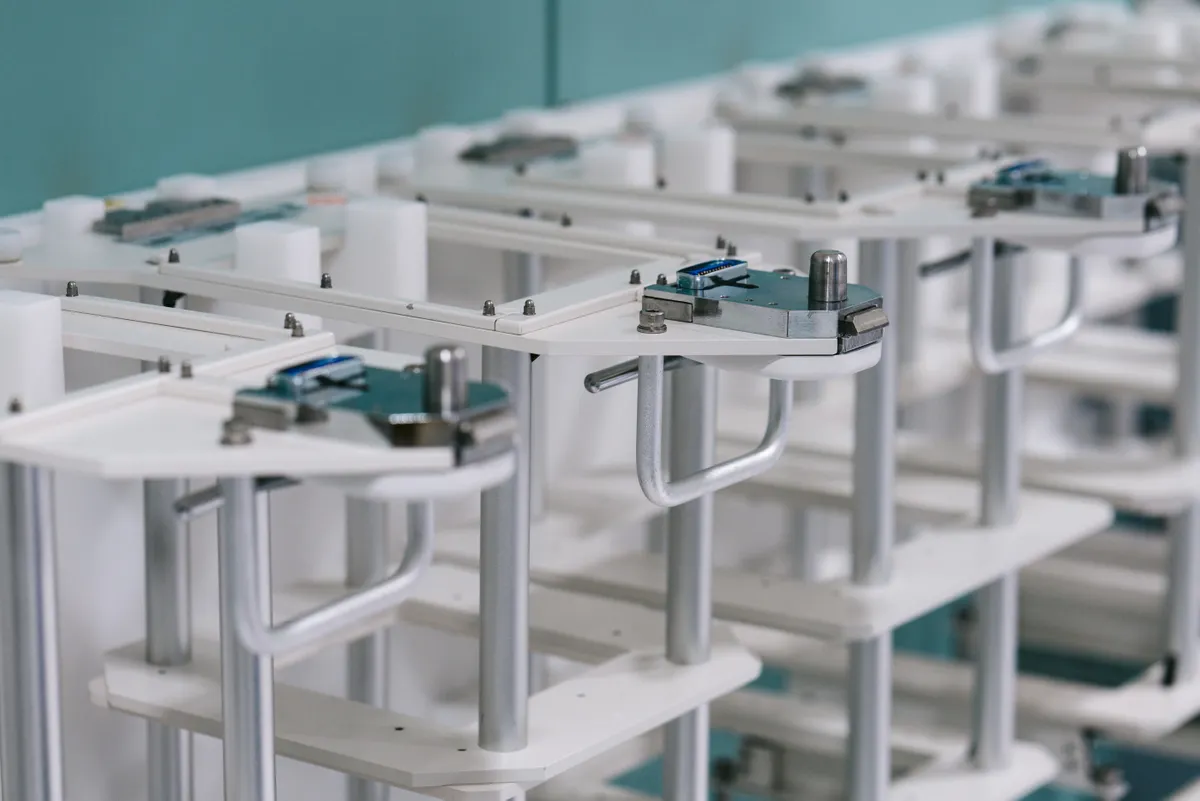

The ASML MATCH Act export controls debate landed in Washington this week in the form of a Dutch trade minister, a round of congressional meetings, and a quietly pointed warning: the bill could cause serious damage to Europe’s most valuable company.
Dutch Trade Minister Sjoerd Sjoerdsma travelled to Washington to meet with Commerce Secretary Howard Lutnick and members of Congress, urging them to reconsider the Multilateral Alignment of Technology Controls on Hardware (MATCH) Act. ‘It’s exceptional that I’m coming here to broadly outline our concerns to Congress,’ Sjoerdsma told Bloomberg after the meetings. ‘The stakes for the Netherlands may be very high.’
You can see why he made the trip. ASML, headquartered in Eindhoven, is the only company on earth that manufactures the extreme ultraviolet (EUV) lithography machines used to produce cutting-edge AI chips. No ASML, no leading-edge semiconductors. That monopoly makes it a pressure point whenever Washington and Beijing square off over chip technology.
What the MATCH Act Export Controls Would Actually Do
The bill was introduced in the House on 2 April 2026 by Congressman Michael Baumgartner (WA-05), with a Senate companion brought by Senator Jim Risch, chairman of the Senate Foreign Relations Committee, joined by Senators Pete Ricketts and Andy Kim. The House bill (H.R. 8170) was advanced by the House Foreign Affairs Committee on 22 April 2026, in a session legislators described as the largest significant export control mark-up in congressional history.
The legislation would push U.S. allies, including the Netherlands and Japan, to match American restrictions on selling advanced chipmaking equipment to China. Crucially, it extends the curbs beyond ASML’s EUV machines, which are already banned from reaching China, to cover deep ultraviolet (DUV) immersion lithography tools as well. It would also close servicing and entity-specific loopholes that currently allow some transactions to proceed.
As ASML CEO Christophe Fouquet explained to TechCrunch in May, what China can currently buy from ASML is older-generation DUV equipment, first shipped about a decade ago. The MATCH Act would make even those legacy tools off-limits.
China represents 19% of ASML’s net system sales, according to the snippet. That said, Yahoo Finance’s analysis of ASML’s revenue mix puts China’s contribution at 33% of net system sales for full-year 2025, down from 41% in 2024. The divergence likely reflects different reporting periods or bases; the 19% figure may represent a more recent quarter. Whichever number is current, the direction of travel is already downward, and the MATCH Act would accelerate that drop sharply.
The Financial Stakes for ASML Are Not Hypothetical
ASML recorded €32.7 billion in total net sales for full-year 2025, a 15.6% year-on-year increase, with a gross margin of 52.8% and net income of €9.6 billion, according to its Q4 2025 results release. Its order backlog at end-2025 stood at €38.8 billion. For 2026, the company has guided for total net sales of between €34 billion and €39 billion, with a gross margin of 51% to 53%, per ASML’s 2025 annual report financials.
Those are strong numbers. But they were built in a world where DUV sales to China remained possible. Strip that revenue out entirely and the 2026 guidance range starts to look optimistic at the upper end.
The MATCH Act hasn’t faced a full House or Senate floor vote. Bloomberg has noted it would likely need to be folded into a larger legislative package to pass, which gives both sides room to negotiate. That’s presumably part of what Sjoerdsma was signalling in Washington: the Netherlands is a close U.S. ally, ASML is a geopolitically irreplaceable supplier, and Europe would rather be consulted than simply presented with a new set of restrictions.
Whether Congress agrees is a separate question. The bill has bipartisan sponsors on both sides of the Capitol, and the political logic of tightening China’s access to advanced chipmaking tools is not going away. The next test is whether the MATCH Act’s export controls language survives whatever larger package carries it over the line, and at what point allied governments stop lobbying quietly and start pushing back harder.
