
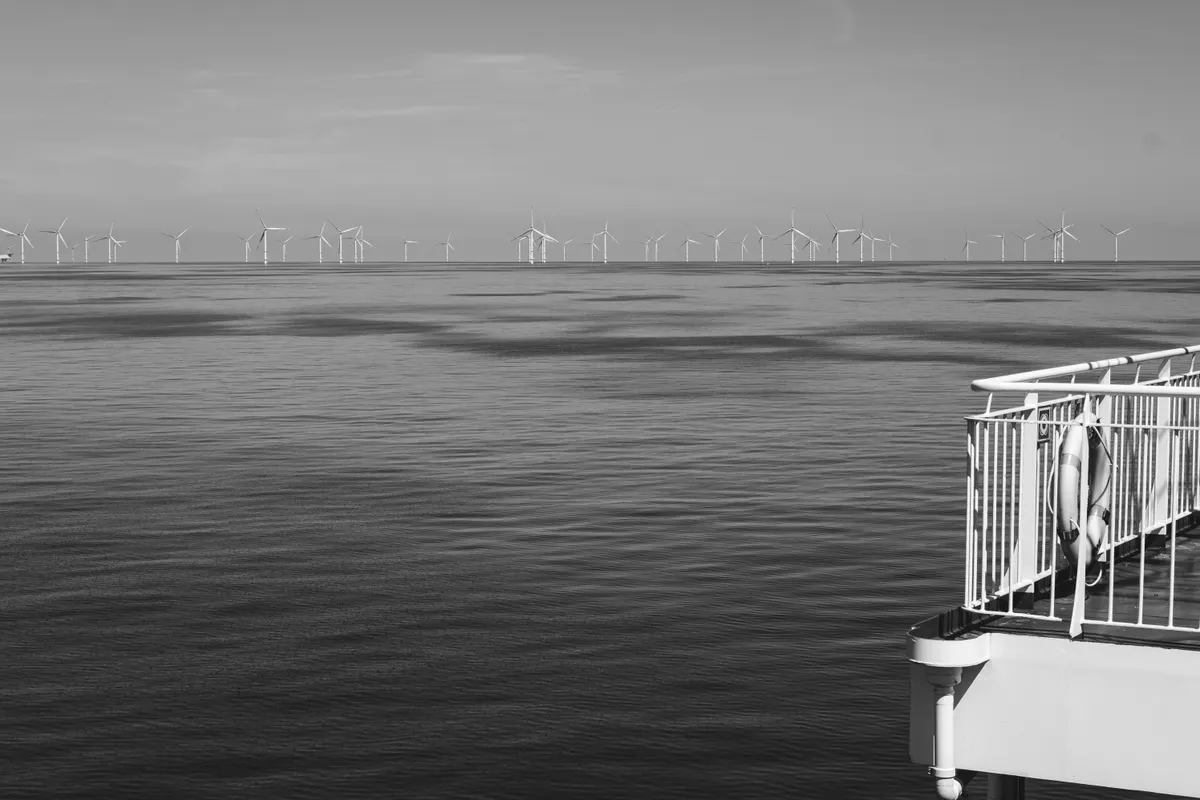

The Trump administration’s offshore wind cancellations have now cost the public purse $3.93 billion, after the government agreed a $1.22 billion settlement with German utility RWE to abandon its U.S. offshore wind leases. That’s 12 leases coaxed from developers in total, and counting.
RWE said there is ‘no path forward to permit these projects in the U.S. for the foreseeable future,’ which is one way to describe a policy environment that pays you $1.22 billion to go away.
The Offshore Wind Cancellation Tab, Running
The deals have followed a steady drumbeat. A settlement of roughly $1 billion with TotalEnergies came first in March 2026, followed by two further lease cancellations in April and a $765 million buyout of four more leases in June, according to Wind Watch. The RWE figure is the largest single payout yet.
The leases RWE is relinquishing would have supported wind farms off the coasts of California, Louisiana, and New York. The New York project alone was sized at more than 3 gigawatts. According to Offshore Wind Biz, those projects were in very early stages of development and would not have come online until the 2030s in any case, which makes the settlement feel slightly more like a legal exit fee than a genuine stranded-asset rescue.
Before reaching the settlement, RWE had quietly acquired National Grid Ventures’ approximately 27% minority stake in the Community Offshore Wind joint venture, consolidating its ownership before exiting, according to GreentechLead. The sequence suggests RWE was tidying the house before handing back the keys.
Where the $1.22 Billion Actually Goes
The settlement is being recycled into fossil fuel infrastructure. $900 million of it buys RWE an indirect 16% stake in a Louisiana liquefied natural gas export terminal run by Woodside Energy, with the proceeds intended to support the terminal’s construction, according to a Simpson Thacher advisory note.
The remaining $300 million goes to a turbine reservation agreement, securing future natural gas generation capacity for a portfolio of 15 peaking power plants across the U.S., according to Processing Magazine. Peaking plants are among the most expensive and highest-polluting natural gas generators to operate. When they will actually be running is an open question: there is currently a backlog for new turbines stretching into the early 2030s.
So the administration has spent nearly $4 billion to swap planned clean energy projects for a minority stake in an LNG terminal and a queue for turbines that don’t yet exist. The transaction has its own internal logic, clearly. It just isn’t an energy security logic that resolves quickly.
RWE Isn’t Retreating From Offshore Wind, Just from This Postcode
The company’s global offshore wind business is in reasonable shape. Preliminary figures show its Offshore Wind segment posted adjusted EBITDA of EUR 810 million in the first half of 2026, up from EUR 643 million in the same period a year earlier, driven by higher electricity generation under more favourable wind conditions, according to Offshore Wind Biz. RWE subsequently raised its full-year 2026 earnings outlook for the division.
The U.S. exit is being absorbed partly because the UK is picking up the slack. RWE secured 6.9 gigawatts of capacity in the UK’s Contracts for Difference Allocation Round 7, covering five projects: Norfolk Vanguard West and East off the English east coast, two projects on the southern part of Dogger Bank, and Awel y Môr in the Irish Sea. Norfolk Vanguard East and West secured a strike price of £91.20/MWh.
KKR is co-investing, having agreed to acquire a 50% equity stake in each of the Norfolk Vanguard East and West projects, which together account for 3.1 GW. Financial close and project financing are targeted for summer 2026, with commissioning expected in 2029 and 2030 respectively.
The pattern is coherent enough: RWE takes U.S. government money to exit a hostile regulatory environment and redeploys capital in jurisdictions where offshore wind is actually being built. The question is whether the Trump administration’s offshore wind cancellation programme ends up accelerating that redeployment to the UK and Europe, rather than the fossil fuel pivot the settlement paperwork implies. The next lease cancellation deal, when it comes, will tell us whether the $3.93 billion figure has much further to travel.
